Far side of the Moon · 6 April 2026 · Wiseman, Glover, Koch and Hansen
We Love You, from the Moon
Fifty-three years after the last Apollo crew came home, four astronauts rode an American rocket back to the Moon and flew farther from Earth than anyone ever had.

The moment · 18:44 EDT · 6 April 2026
Orion is swinging around the Moon, farther from home than any crew in history. Three minutes ago the Earth slipped below the gray horizon. The radio is about to go dead behind the far side. Victor Glover keys his microphone one last time.
And to all of you down there on Earth and around Earth, we love you, from the Moon.Victor Glover, pilot
No human had left Earth orbit since Apollo 17 in December 1972. Artemis II was the test flight to change that: the first crew aboard NASA’s Space Launch System and Orion spacecraft, flown around the Moon and home again. Every system had to work with people inside before Americans could go back to the lunar surface.
Liftoff from 39B
The countdown works through a flight termination system glitch and a bad sensor reading. At 18:22 launch director Charlie Blackwell-Thompson polls her team and every station is go. Thirteen minutes later the 322-foot SLS lifts off Launch Complex 39B on 8.8 million pounds of thrust, the first crew to fly from that pad since 2006.
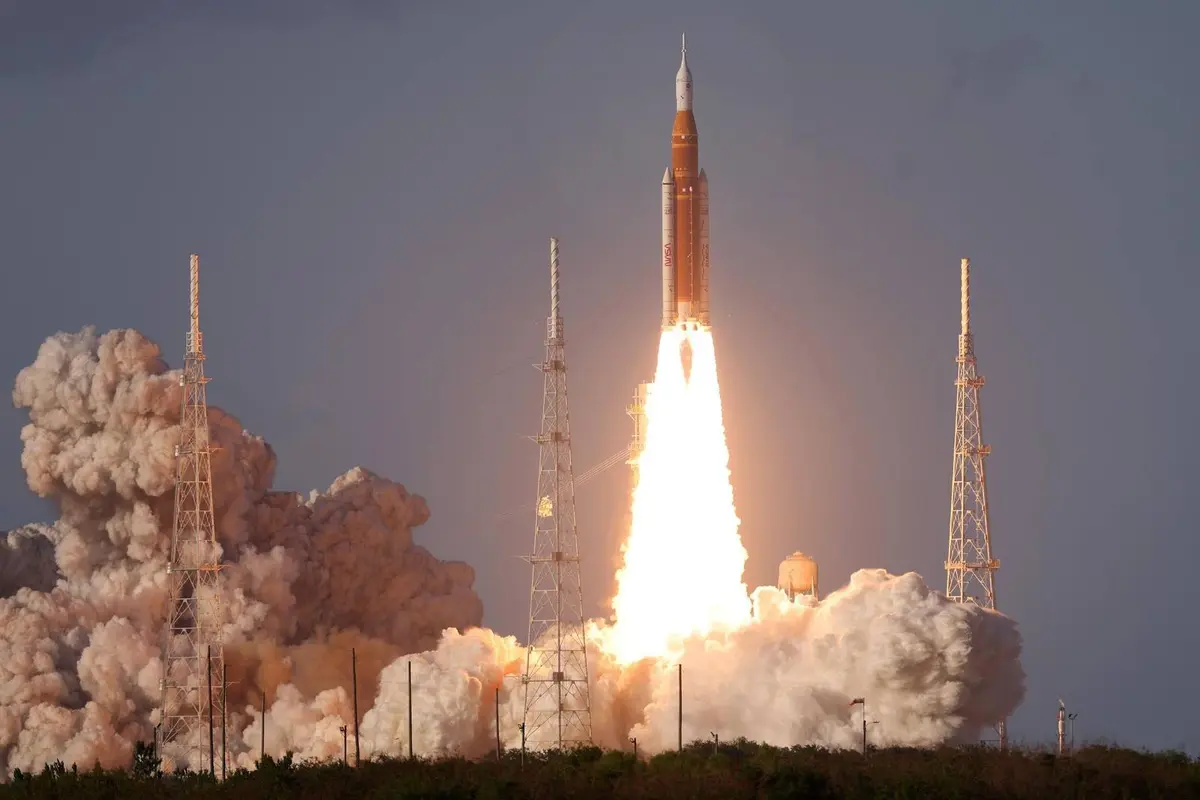
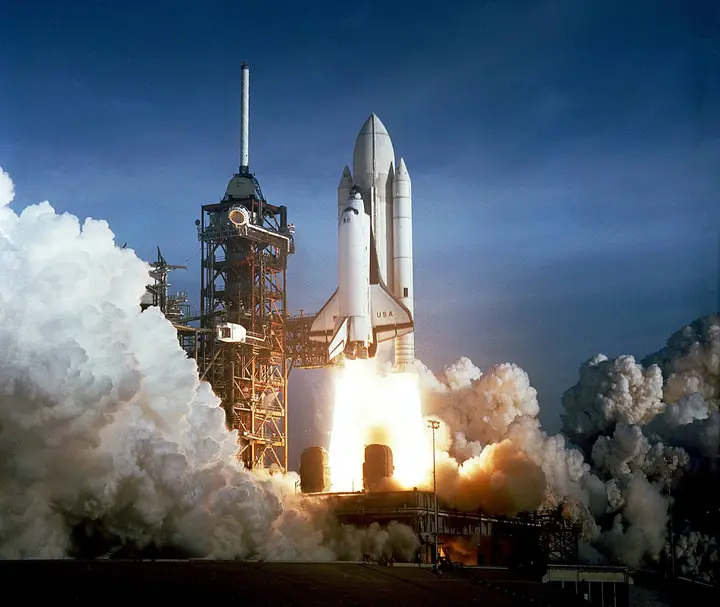
The Space Launch System lifts Orion and four astronauts off Launch Complex 39B, Kennedy Space Center, 18:35 EDT, 1 April 2026.. NASA / Michael DeMocker. Flying Integrity by hand
The two solid rocket boosters, each 177 feet tall, fall away two minutes up. By 18:59 Orion’s four solar wings are spread 63 feet across. The crew has named the ship Integrity. About three hours into the flight, Victor Glover and Reid Wiseman take manual control and fly it around the spent upper stage for about 70 minutes, testing how Orion handles.
Leaving Earth orbit
Orion’s main engine fires for 5 minutes and 50 seconds and throws Integrity out of Earth orbit on a path to the Moon. For the first time since Apollo 17, people are headed for deep space. Aboard are three Americans and Jeremy Hansen of the Canadian Space Agency, the first non-American to make the trip.
Past Apollo 13
On flight day six, the crew passes 248,655 miles from Earth. That record belonged to Jim Lovell, Jack Swigert and Fred Haise, set in 1970 as they nursed a crippled Apollo 13 around the Moon and home. It had stood for 56 years. Hansen speaks for the crew, saying they cross the line honoring the feats of those who came before.
Seven hours at the windows
The lunar observation period begins. The four take turns at Orion’s windows with cameras, describing colors and textures to scientists in Houston. They photograph the 600-mile-wide Orientale basin. Just before, they named two craters. One is Integrity, for their ship. The other is Carroll, for Wiseman’s late wife, Carroll Taylor Wiseman, a newborn intensive care nurse.
Behind the Moon
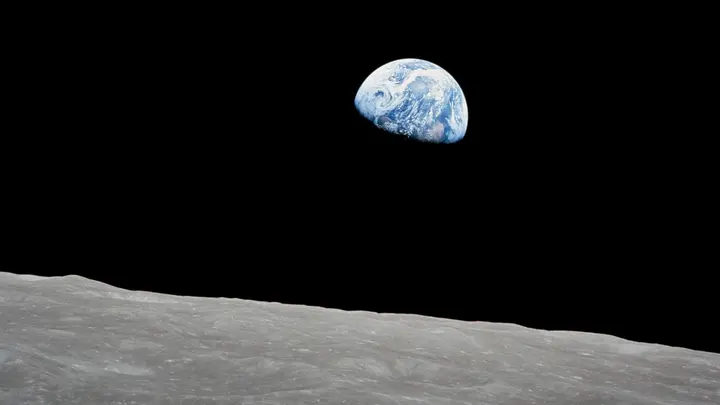
At 18:41 the crew watches the Earth set behind the lunar horizon, an echo of the Earthrise Apollo 8 photographed in 1968. Three minutes later Orion passes behind the Moon and the Deep Space Network loses its signal. For about 40 minutes, no radio on Earth can reach the four of them.
Glover to Mission ControlAnd to all of you down there on Earth and around Earth, we love you, from the Moon.
Farthest from home
At 19:00 Orion makes its closest approach, 4,067 miles above the far side at 3,139 miles an hour. Two minutes later it reaches 252,756 miles from Earth, 4,111 miles past Apollo 13 and the farthest any human has ever traveled. At 19:24 the Earth rises over the Moon’s edge and Houston hears the crew again.
An eclipse from deep space
With the flyby done, the Sun slides behind the Moon and the crew watches a solar eclipse that lasts nearly an hour, the Moon a black disk ringed with light. Cameras on the solar wings record it too. By the end of the day the crew has taken more than 7,000 photographs of the lunar surface and the eclipse. At 21:35 they turn for home.
Splashdown
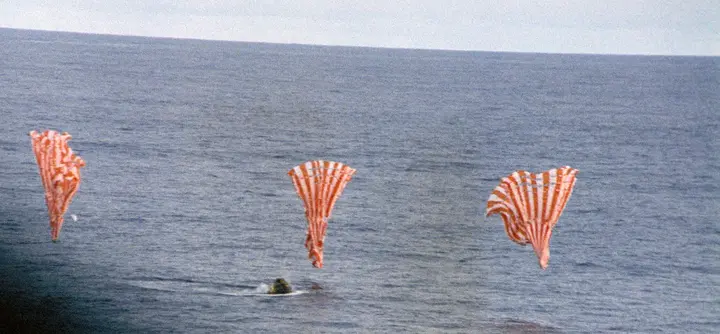
Integrity sheds its service module and hits the atmosphere at 400,000 feet, 35 times the speed of sound. After six minutes of radio blackout the drogue chutes open at 23,400 feet and the mains at 5,400. Orion splashes down in the Pacific off San Diego. Navy divers reach the capsule, and helicopters carry the crew to the amphibious transport dock USS John P. Murtha.
The crew

Baltimore native and Navy F-14 pilot who flew in Operations Southern Watch, Enduring Freedom and Iraqi Freedom, then became a test pilot. Spent 165 days on the space station in 2014 and ran the Astronaut Office. Commanded the first crew to the Moon since 1972.

Navy test pilot with more than 4,000 hours in over 40 aircraft, 400 carrier landings and 24 combat missions. Piloted SpaceX Crew-1 and spent 168 days in space. On Artemis II he flew Orion by hand in Earth orbit.

Electrical engineer who built space science instruments and wintered over at the South Pole before joining NASA in 2013. Holds the record for the longest single spaceflight by a woman, 328 days, and has made six spacewalks.
By the numbers
In pictures


Watch, listen, see
Films, photographs and first-hand accounts from across the web. Each opens in a new tab.

NASA’s full broadcast of the lunar flyby: the record, Earthset, loss of signal and the eclipse.
NASA
The official launch broadcast, from countdown to SLS climbing off the pad toward the Moon.
NASA
Reentry, parachutes, splashdown off San Diego and the Navy recovery, as NASA broadcast it.
NASA
More than 30 photos of the recovery at sea, the crew aboard USS John P. Murtha and the homecoming.
NASA
Every milestone of Artemis II, from launch to splashdown, in photos and video clips.
NASA Johnson Space Center
NASA’s podcast replays the crew’s own words from the flyby, Earthrise and the crater naming.
NASA Curious Universe
A simulated window view of Orion’s path around the far side, 36 hours in about a minute.
NASA Scientific Visualization Studio
NASA’s full guide to the mission: the rocket, the spacecraft, the trajectory and the crew.
NASA“There is nothing normal about this. Sending four humans 250,000 miles away is a Herculean effort, and we are now just realizing the gravity of that.”
Commander Reid Wiseman, aboard Orion, April 2026
After
The next day the crew stood in the well deck of USS John P. Murtha beside the scorched capsule that had carried them, then flew home to Ellington Field in Houston. NASA Administrator Jared Isaacman welcomed them home and congratulated them on a truly historic achievement.
Artemis II proved the Space Launch System and Orion with people aboard, from a hand-flown test in Earth orbit to a fiery return at 35 times the speed of sound. It was the step NASA needed before sending astronauts back down to the lunar surface.
Twenty-four Apollo astronauts flew to the Moon between 1968 and 1972. Now four more have made the trip, and they went farther than any of them.
Keep exploring
- Houston, We’ve Had a ProblemAn oxygen tank blew more than 200,000 miles from Earth. Mission Control and the crew worked out the way home.87hours to get home
- EarthriseThree Americans left Earth’s orbit for the first time, circled the Moon on Christmas Eve, and read Genesis to the world.1sthumans to orbit the Moon
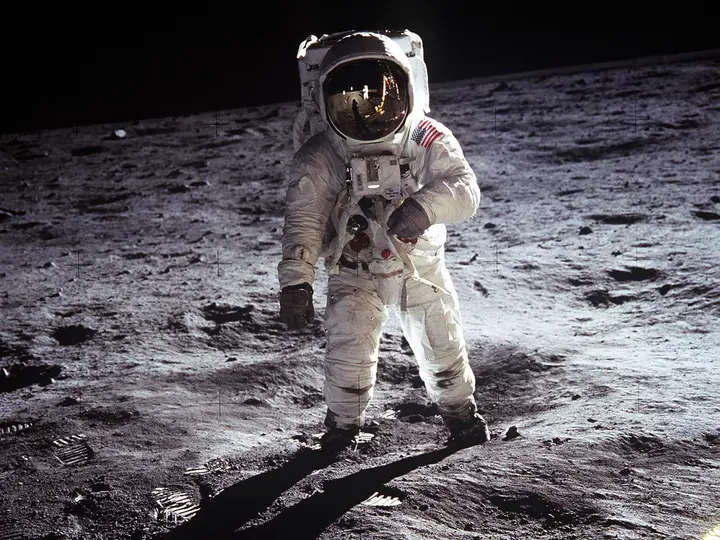
- Apollo 11Eight years after a president said we would, two Americans walked on the Moon.240Kmiles
- ColumbiaTwo astronauts flew a brand-new winged spacecraft into orbit on its first flight and landed it like an airplane.1streusable spaceship


Free, with no ads. Support the museum →