Moscone West, San Francisco · 9 January 2007 · Jobs, Forstall, Fadell, Ive
Apple Reinvents the Phone
Steve Jobs promised three revolutionary products and pulled one out of his pocket. That June, Americans lined up on the sidewalks to buy it, and the smartphone era began.

The moment · 9 January 2007 · Moscone West
Steve Jobs stands alone on the stage. He promises three revolutionary products: an iPod, a phone and an internet communicator. He says them again, and again, until the crowd catches on. Then he names the one device and slides it out of his pocket.
These are not three separate devices. This is one device. And we are calling it iPhone.Steve Jobs
In the mid-2000s the smartest phones had plastic keyboards, tiny screens and a baby version of the internet. Steve Jobs said everyone at Apple hated their phones. He set a small, secret team to build a better one: a real computer running OS X, worked by your fingers, behind a sheet of glass. Two and a half years later, he took it out of his pocket.
Project Purple
Jobs gives Scott Forstall the phone’s software and one rule: he can hire nobody from outside Apple. Forstall walks the halls pitching star engineers a job he cannot describe. They will work nights and weekends, he tells them, probably for years. The team’s building earns the nickname Purple Dorm, and someone hangs a Fight Club sign on the door. Nobody talks about Purple.
Fingers, not a stylus
Early in 2005 Apple buys FingerWorks, a small Delaware company started by University of Delaware engineers Wayne Westerman and John Elias. Their multi-touch technology and the two men come to Cupertino. Forstall’s team puts a full version of OS X on a phone. Tony Fadell’s iPod engineers build the hardware. Jony Ive’s designers shape it into a single slab of glass with one button.
Three devices in one
Jobs opens his Macworld keynote at Moscone West by saying this is a day he has been looking forward to for two and a half years. He shows off the multi-touch screen, scrolls music with a flick, pinches photos and browses the full web in Safari. To demo Google Maps, he finds a nearby Starbucks, calls it from the stage and orders 4,000 lattes to go. Then he says wrong number.
Jobs, Macworld 2007Today, Apple is going to reinvent the phone.
Glass from Kentucky
Jobs carries a prototype in his pocket, and his keys scratch its plastic screen. With the phone due in June, he demands glass. Apple’s Jeff Williams warns that would take years. Corning CEO Wendell Weeks offers a strengthened glass his company first sold in the 1960s, then shelved. Corning’s plant in Harrodsburg, Kentucky makes it thin enough and tough enough in time.
We all hated our phones
The day before launch, Jobs gathers Apple’s employees. The iPhone, he tells them, was never driven by market research or financial spreadsheets. It was driven by the fact that everyone they knew hated their phones. He calls it the most revolutionary and exciting product in Apple’s history. Starting tomorrow at 6 p.m., he says, they will find out if other people love it as much as they do.
Launch night
All 164 Apple stores in the United States open their doors at 6 p.m. local time. Buyers have waited on the sidewalks for hours, from Broadway in New York to Seattle and San Jose. The 4GB iPhone costs $499 and the 8GB $599, on a two-year AT&T contract. Jobs and the Purple team find out that night how many people love it.
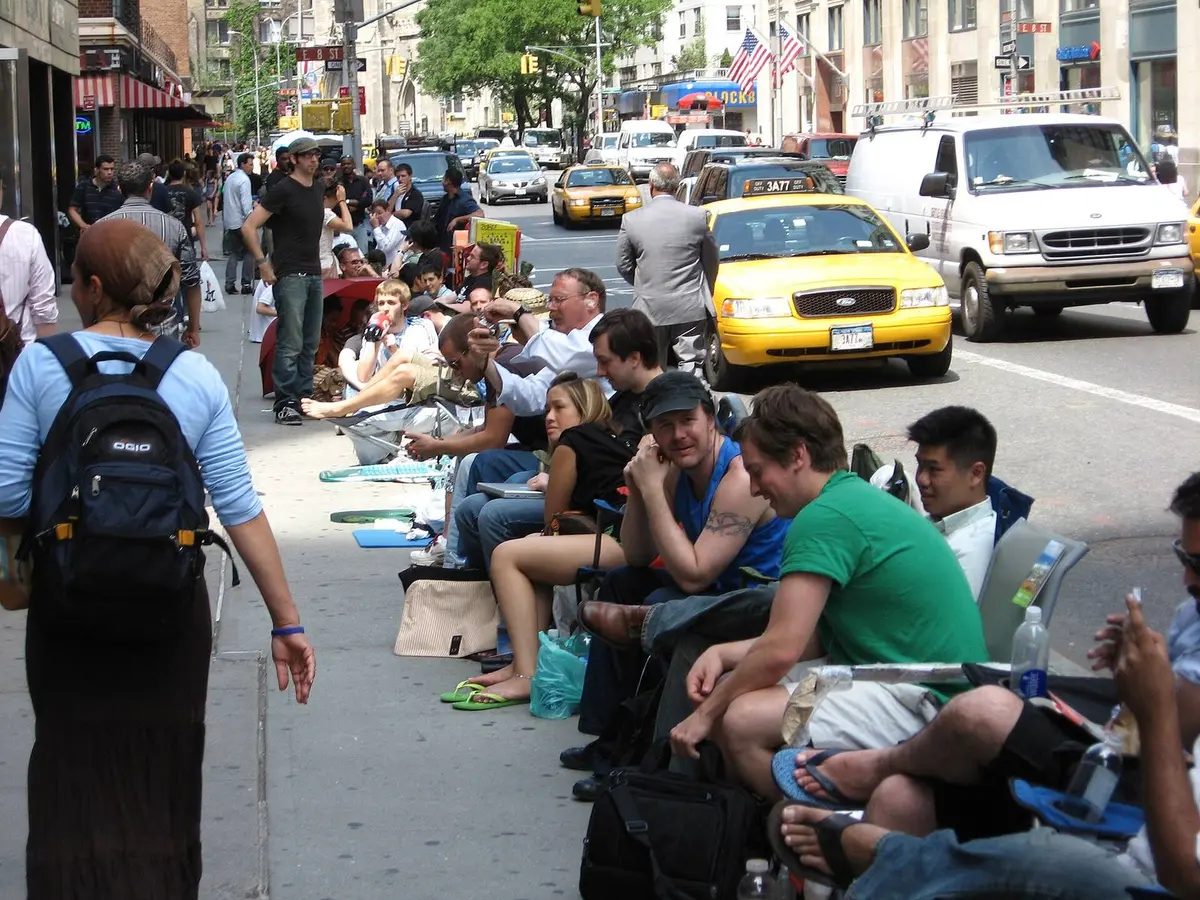
Buyers line the sidewalk outside an AT&T store on Broadway, New York, on iPhone launch day, 29 June 2007. Padraic Ryan. A million in 74 days
Apple sells its one millionth iPhone 74 days after launch. It took almost two years for the iPod to reach the same mark. In November, Time magazine names the iPhone its Invention of the Year. Writer Lev Grossman calls it the first device that really deserves the name of a handheld, walk-around computer.
The App Store opens
In March Apple released its software kit to outside developers, and more than 100,000 downloaded it in four days. Now the App Store opens with more than 500 apps, and the iPhone 3G goes on sale the next day. By the first Monday, customers have downloaded more than 10 million apps. Anyone with an idea and some code can now sell it to iPhone owners around the world.
Jobs, 14 July 2008The App Store is a grand slam, with a staggering 10 million applications downloaded in just three days.
A billion, then three
In July 2016 Tim Cook tells Apple’s employees the company has sold its billionth iPhone. Nine years later, on 31 July 2025, he reports that Apple has shipped its three billionth. The first billion took nine years. The next two billion took nine more. Glass for every generation of them has come from Corning’s plant in Harrodsburg, Kentucky.

The builders

Co-founded Apple in 1976 and launched the Macintosh in 1984. Forced out in 1985, he came back in 1997 and turned the company around with the iMac and the iPod. He drove the iPhone from idea to stage and sold it himself.

Stanford-trained engineer who came to Apple from NeXT in 1997. Jobs gave him the iPhone’s software. He recruited the Purple team from inside Apple, put OS X on a phone, and built the developer kit that filled the App Store.

University of Michigan computer engineer who led the team that built the first iPod in 2001 and went on to run Apple’s iPod division. He led hardware engineering for the first three generations of iPhone, then founded Nest Labs, which Google bought for $3.2 billion.

Designer who joined Apple in 1992 and led its design team from the late 1990s, from the iMac to the iPod. Working side by side with Jobs, he shaped the iPhone into its form: a slab of glass with a single button.
By the numbers
In pictures


Watch, listen, see
Films, photographs and first-hand accounts from across the web. Each opens in a new tab.

Scott Forstall and three original iPhone engineers tell how Project Purple built the first iPhone.
Computer History Museum
Fifteen years of iPhone, told alongside a boy born on launch day, 29 June 2007.
The Wall Street Journal
Technology writers and historians on how the iPhone changed the economy and everyday life.
Computer History Museum
The full text of Jobs’s iPhone introduction, plus his launch-eve speech to Apple employees.
Steve Jobs Archive
Apple’s announcement of 9 January 2007: multi-touch, Visual Voicemail, Safari and Google Maps.
Apple Newsroom
Ten million downloads in three days from more than 800 apps. Jobs called it a grand slam.
Apple Newsroom
Apple and Corning commit $2.5 billion to make every iPhone’s cover glass in Harrodsburg, Kentucky.
Apple Newsroom
A first-generation 8GB iPhone from 2007 in the collection of The Henry Ford in Dearborn, Michigan.
The Henry Ford“Every once in a while, a revolutionary product comes along that changes everything.”
Steve Jobs, Macworld San Francisco, 9 January 2007
After
Time named the iPhone its Invention of the Year for 2007. The phones that followed took its shape: a glass touchscreen, no keyboard, and software from an app store.
The App Store turned the iPhone into a marketplace open to anyone who could write code. By 2024 the apps on it handled $1.3 trillion in sales and billings worldwide, and on more than 90 percent of that, developers paid Apple no commission.
In 2025 Apple committed $2.5 billion to Corning’s plant in Harrodsburg, Kentucky, to make the cover glass for every iPhone and Apple Watch sold anywhere in the world. Corning CEO Wendell Weeks put it plainly: “We developed and made the glass for the very first iPhone in Harrodsburg, Kentucky, 18 years ago.”
Primary sources
- Apple Reinvents the Phone with iPhone. Apple press release, 9 January 2007.
- Make Something Wonderful: Steve Jobs in His Own Words. Steve Jobs Archive, 2023.
- Testimony of Scott Forstall, Apple Inc. v. Samsung Electronics Co., U.S. District Court, Northern District of California, 3 August 2012.