Louisbourg, Cape Breton · 28 June 1745 (17 June Old Style) · New England militia and the Royal Navy
The Gibraltar of the New World Falls
France spent a fortune on the strongest fortress in North America. About 4,000 New England farmers, fishermen and tradesmen took it in 47 days, with their guns dragged through the bog by hand.

The moment · Morning · 13 May 1745
Smoke from burning warehouses has drifted across the harbor. Lt. Col. William Vaughan is marching about a dozen men back to camp when he sees the Grand Battery sitting silent. No flag flies. No sentry moves. He sends a scout forward. The scout climbs through a gun port and opens the gate.
Louisbourg was France's Atlantic fortress, built on Cape Breton to guard the gulf and the fishery. Its privateers hunted New England ships. Its walls and island battery were meant to stop any fleet. In 1745 Massachusetts Governor William Shirley proposed to take it with militia. William Pepperrell, a Maine merchant, agreed to lead them, and Commodore Peter Warren's Royal Navy squadron closed the sea.
The Gibraltar of the New World
After 1713 France was left with Cape Breton, its only Atlantic base. It built Louisbourg there, with stone ramparts, a moat and an island battery that covered the harbor mouth. The cost was reckoned at 30 million livres. Its privateers raided New England shipping and its garrison guarded the cod fishery. New Englanders called it the Dunkirk of America.
The Governor’s Plan
Governor William Shirley lays a plan before the General Court of Massachusetts to take Louisbourg. It loses narrowly on 9 January. Two weeks later 200 Boston merchants and traders petition for the attack. On 25 January the legislature votes to raise the army. Connecticut and New Hampshire soon join, and Rhode Island, New York, Pennsylvania and New Jersey send ships, guns or money.
A merchant takes command
Shirley wants a commander the militia will follow. He picks William Pepperrell, a Kittery merchant, shipowner and militia colonel with no formal military training. His name draws farmers and tradesmen into the ranks. In a little more than seven weeks about 4,000 men are mustered and a fleet is fitted out, including 14 armed provincial vessels. The preacher George Whitefield suggests the motto for the army’s flag.
About ninety sail
The fleet sails from Boston, 24 March by the colonists’ Old Style calendar, with about 4,000 soldiers and sailors in some 90 ships. It stops at Canso to wait for the ice off Cape Breton to clear. There Commodore Peter Warren joins with his Royal Navy ships, a ship of the line and three frigates. He had no orders to help. The Admiralty’s orders reached him in March, weeks after Shirley’s January request.
Two thousand ashore
The fleet drops anchor in Gabarus Bay, a few miles from the fortress. Surf breaks along the beach and the French send about 150 men to meet the landing. John Gorham’s whaleboats go in, and the provincials come ashore through the surf. Nearly 2,000 men get onto the beach by nightfall. The army camps by the shore and begins to move guns and supplies.
A dozen men and a red coat
A detachment burns French warehouses at the head of the harbor. The smoke blows toward the Grand Battery, and its commander spikes the guns and withdraws. In the morning Lt. Col. William Vaughan, marching home with about a dozen men, finds it deserted. A scout goes through a gun port and opens the gate. One of the men climbs the flagstaff and nails up his red coat for a flag. The provincials turn the battery’s heavy 42-pounders on the fortress.
Dragged by hand
The fortress stands two miles from the landing beach, across marsh and rock. Wheels will not turn on the ground. Lt. Col. Nathaniel Meserve of New Hampshire builds sledges. Teams of men harness themselves to them, often at night, and haul each gun, mortar and load of powder through knee-deep mud to the trenches. Within weeks Pepperrell has batteries firing on the town from several sides.
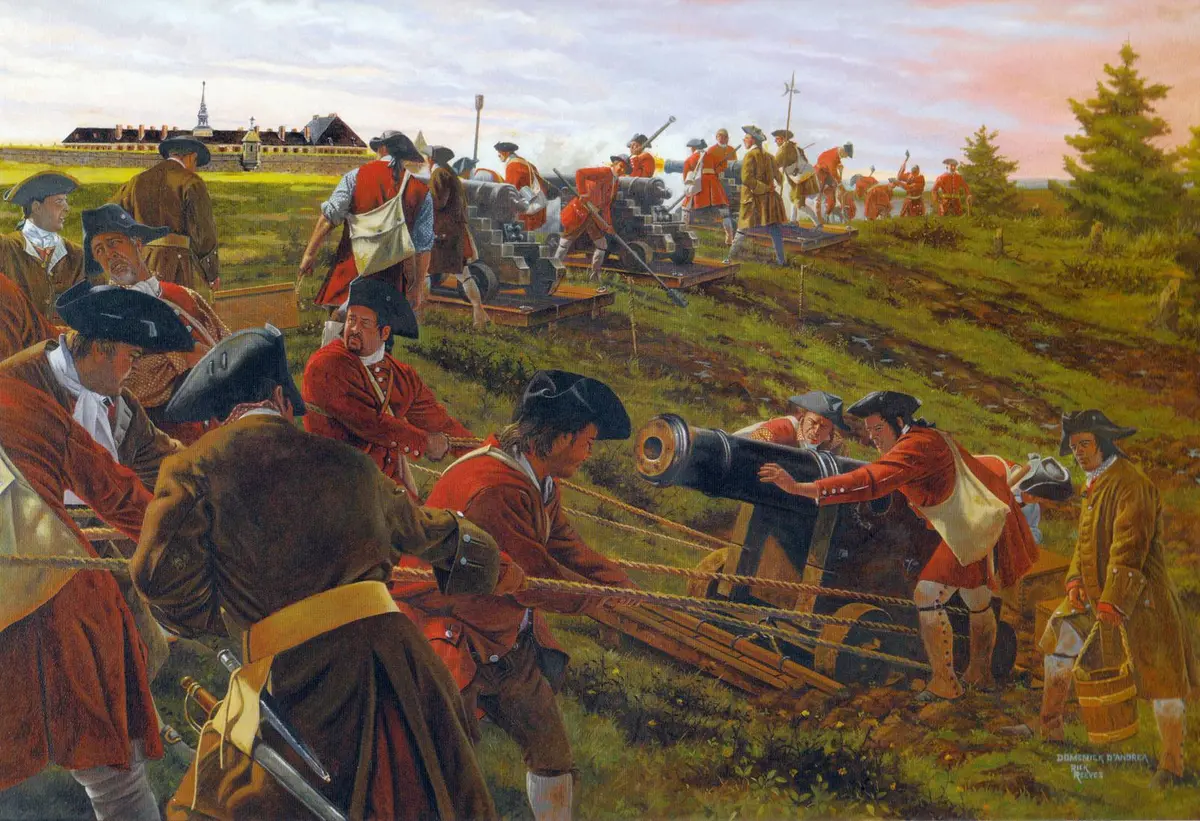
New England militia haul a siege gun on a sledge toward the fortress, painted for the National Guard.. Domenick D'Andrea / National Guard Bureau. The supply ship
In a thick fog the French ship Vigilant, a new ship of about 60 guns and loaded with stores for the garrison, runs into Warren’s squadron. HMS Mermaid engages her until more ships arrive, and she strikes her colors. Pepperrell says the news raises a burst of joy in the army. By June Warren’s squadron has grown to six ships of the line and five frigates, 554 guns in all. The fortress cannot be resupplied.
The fortress surrenders
After weeks of bombardment, Governor Duchambon sends a flag to Pepperrell and asks for terms. The garrison marches out with the honors of war. On 28 June the town and its fortress pass to Pepperrell and Warren. The colonists’ Old Style calendar puts the surrender on 17 June, and in New England it is long remembered that way. Pepperrell walks into a town his batteries have shattered and gives thanks.

The commanders

A Kittery merchant, shipowner and militia colonel with no formal military training. He raised and led about 4,000 men and held the siege together for 47 days. In 1746 King George II made him a baronet, the first American-born.

An English lawyer who came to Boston in 1731 and became governor in 1741. He drew up the plan for Louisbourg, won the General Court’s vote and had an army and a fleet ready in about seven weeks.

An Irish-born captain who had spent much of his career on the American and West Indian stations. His squadron blockaded the harbor and took the Vigilant. After the victory he was promoted to rear admiral.

A New Hampshire-born merchant who settled at Damariscotta, Maine. He pressed the plan to take Louisbourg on the colony’s leaders, then led the party that walked into the Grand Battery.
By the numbers
In pictures


Watch, listen, see
Films, photographs and first-hand accounts from across the web. Each opens in a new tab.

Documentary with a re-creation of the 1745 siege, filmed at the reconstructed fortress.
National Film Board of CanadaThe merchant who led the New England army, from his Kittery counting house to the baronetcy.
Dictionary of Canadian BiographyThe Maine merchant who pressed the plan and took the Grand Battery.
Dictionary of Canadian BiographyThe commodore whose ships blockaded Louisbourg and took the Vigilant.
Dictionary of Canadian Biography
Samuel Adams Drake’s 1891 history of the expedition, free to read online.
Project GutenbergA 1745 broadside song with a woodcut of the bombardment, printed to celebrate the volunteers.
Massachusetts Historical Society
Peter Monamy’s oil painting of the fleet closing on the fortress, 28 June 1745.
Royal Museums Greenwich
The reconstructed town and ramparts, a national historic site on Cape Breton.
Parks Canada“Nil desperandum Christo duce.”
Motto on the Louisbourg expedition’s flag, suggested by George Whitefield, 1745
After
New England had taken the strongest fortress in North America. Boston heard the news on 14 July (3 July Old Style) and New England celebrated. King George II made Pepperrell a baronet in 1746, the first American-born holder of the title, and Warren became a rear admiral. After four years Parliament repaid the colonies their costs.
The army had done what many in London thought impossible. Farmers, fishermen and tradesmen had taken a garrison behind the finest walls in the New World. The campaign taught New Englanders how to organize, supply and lead an army.
In 1748 the Treaty of Aix-la-Chapelle returned Louisbourg to France as part of a general peace. The men who had taken it never forgot how. Richard Gridley, the engineer who laid out the lines at Louisbourg, laid out the lines on Breed’s Hill 30 years later.
Keep exploring
- Bunker HillFarmers and militia on Breed’s Hill held their fire until the last moment and threw back the British regulars twice.2assaults thrown back
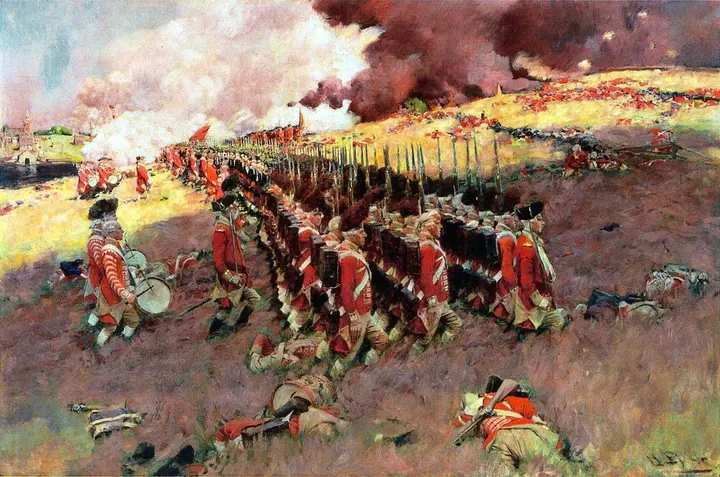
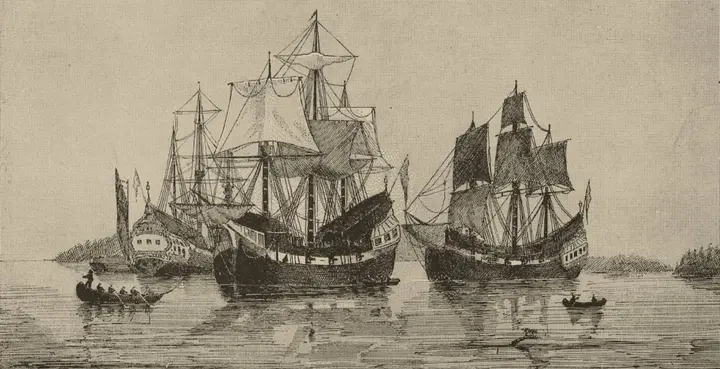
- A City upon a HillJohn Winthrop told the Puritans bound for Massachusetts Bay they would be a city upon a hill, with the eyes of all people upon them.11ships, one charter
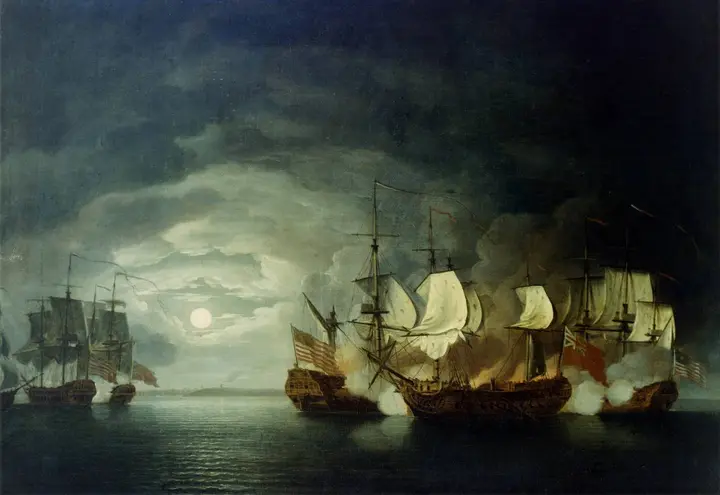
- I Have Not Yet Begun to FightHis ship sinking under him, John Paul Jones lashed it to a British frigate and took her.3½hours
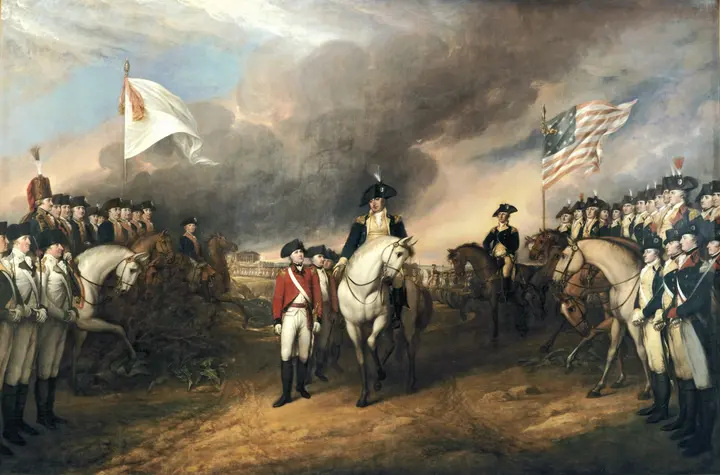
- YorktownCornwallis’s army marched out between the allied lines and laid down its arms. A new nation had beaten the British Empire.~8,000surrendered


Free, with no ads. Support the museum →