Edwards Air Force Base, California · 3 October 1967 · Maj. Pete Knight and the X-15 pilots
Mach 6.7
Twelve test pilots flew a black rocket plane to the edge of space. On 3 October 1967 Pete Knight flew it at 4,520 miles an hour, and no airplane with a pilot aboard has flown faster since.

The moment · About 14:30 PDT · 3 October 1967
Pete Knight drops from the B-52 over Mud Lake and lights the engine. At 72,300 feet the drop tanks fall away and the white airplane leaps ahead. The engine burns for 140 seconds. The needle reads 6,500 feet per second, then 6,600. Mach 6.7.
In the mid-1950s the NACA, the Air Force and the Navy asked for an airplane that could fly six times the speed of sound and climb above the atmosphere. North American Aviation built three. Dropped from under the wing of a B-52, twelve test pilots flew them 199 times in ten years and brought home what America needed to know to fly in space.
First flight
North American test pilot Scott Crossfield drops from the NB-52A at 37,500 feet for the first X-15 flight, a glide with no engine. Just before landing the nose starts to pitch up and down, wilder with each swing. Crossfield damps it out by hand and sets the airplane down on Rogers Dry Lake 4 minutes and 56 seconds after launch. Engineers speed up the controls, and the program moves on.
Under power
Crossfield makes the first powered flight on two interim XLR11 rocket engines, the same type that pushed the Bell X-1 through the sound barrier. He reaches Mach 2.11 and 52,341 feet. In 1960 the real engine arrives: the XLR99, 57,000 pounds of thrust. On 15 November 1960 Crossfield flies it for the first time at half throttle and still climbs to Mach 2.97.
Six times the speed of sound
Air Force Maj. Bob White has already been the first pilot to fly Mach 4 and Mach 5. Today he flies the X-15 to Mach 6.04, 4,093 miles an hour, the speed it was designed for. On the way down his right windshield cracks from the heat. He lands looking out the left side only. The design goal for the whole program is met in its third year.
Armstrong's cross-country flight
NASA pilot Neil Armstrong climbs to 207,500 feet to test a new automatic flight control system. Coming down, the airplane balloons back up out of the thick air and will not turn. He sails past Edwards at Mach 3 and ends up 45 miles south of the base, over Pasadena. He stretches the glide home and lands at the far end of Rogers Dry Lake after 12 minutes and 28 seconds, the longest X-15 flight ever made.
Wings in space
Bob White climbs higher than planned and reaches 314,750 feet, the first flight by a winged craft above 50 miles. It earns him Air Force astronaut wings and sets a world record for airplanes. Joe Walker, in the NASA-1 control room, signs off with a line every pilot wants to hear: "This is your happy controller going off the air." The next day White is at the White House.
White, pilot reportYou could just see as far as you looked. I turned my head in both directions and you see nothing but the Earth. It's just tremendous.
Sixty-seven miles up
NASA's chief research pilot Joe Walker drops over Smith Ranch Dry Lake and runs the XLR99 at full power for 85.8 seconds. At burnout he is passing 176,000 feet at 5,600 feet per second. He coasts for almost two minutes to the top: 354,200 feet, 67 miles above the Earth. He reenters at five times gravity and lands at Edwards 11 minutes after launch, 305 miles from where he started.
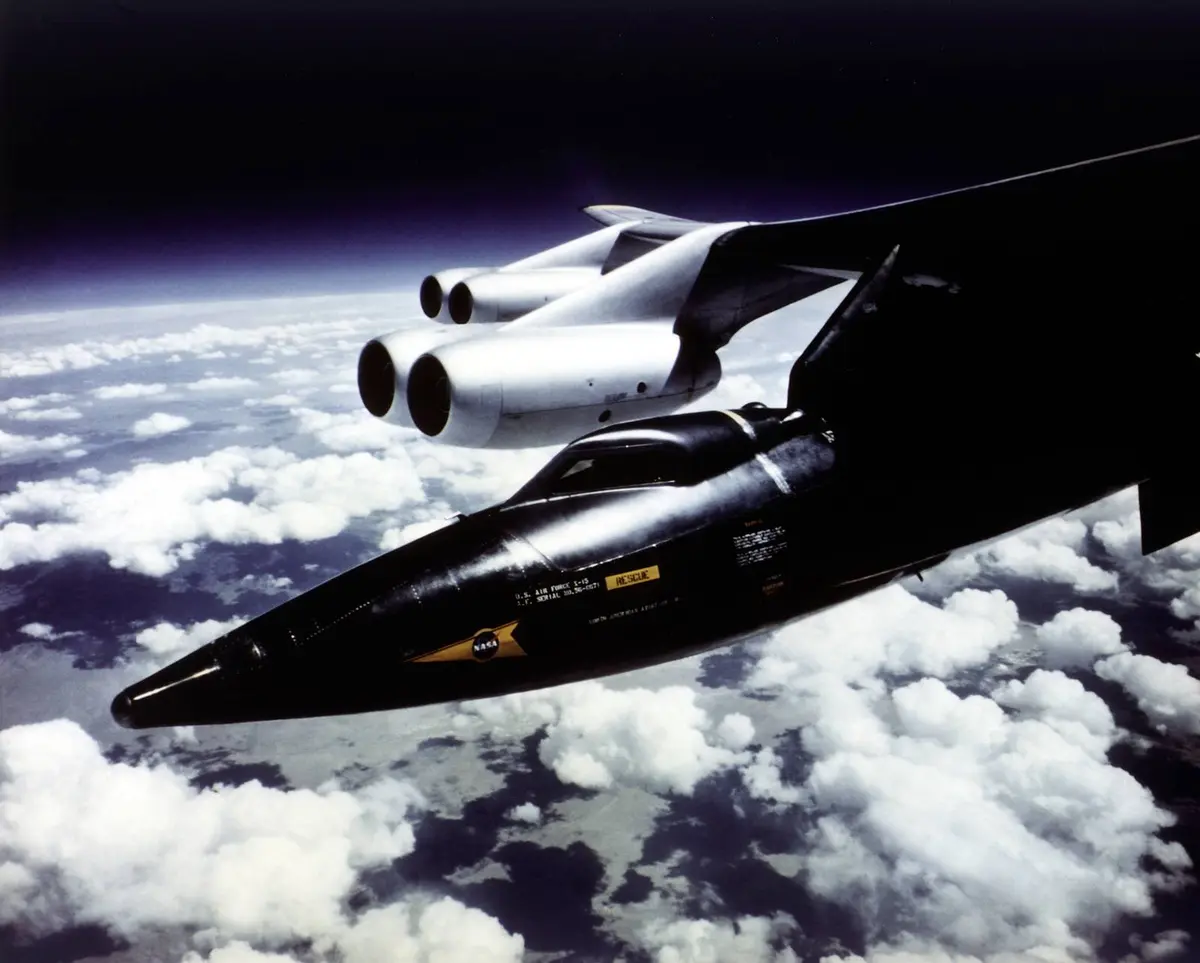
An X-15 rides under the wing of its B-52 mothership, photographed through an observation window of the bomber.. NASA. The white X-15
The second X-15 has been rebuilt as the X-15A-2, with a longer fuselage and two drop tanks that add a full minute of engine burn. To survive the heat above Mach 6, crews spend six weeks coating it in a pink ablative heat shield, then seal it in white. A dummy ramjet hangs under the tail. Fueled for its record flight, it weighs 52,117 pounds, half again what its designers drew in 1954.
Mach 6.7
Over Mud Lake, Nevada, Maj. Pete Knight drops from NASA's NB-52B at 43,750 feet. He lights the engine and holds a steep climb. At 67 seconds the tanks fall away at Mach 2.4. He levels at 102,100 feet and lets the engine run for 140.7 seconds. Radar clocks the X-15A-2 at Mach 6.70, 4,520 miles an hour. No airplane with a pilot has gone faster since.
Knight, after the flightWe shut down at 6,500 and I took careful note to see what the final got to. It went to 6,600 maximum on the indicator.
Flying blind, flying home
Slowing through Mach 5.5, a HOT PEROXIDE light comes on. Shock waves are burning the tail. The ablator has smeared his right windshield and the left one is shuttered, so Knight flies on instruments while Bill Dana in NASA-1 talks him in. He cannot dump his leftover fuel. He lands 1,500 pounds heavy, 8 minutes and 12 seconds after launch. The crew finds holes melted in the tail and the ramjet gone.
The pilots

Navy fighter instructor in World War II and, in 1953, the first pilot to fly twice the speed of sound. He helped design the X-15 and its ejection seat, then flew its first glide, first powered flight and first flight on the big engine.

P-51 pilot shot down over Germany on his 52nd mission and held as a prisoner of war. In the X-15 he was first to fly Mach 4, 5 and 6, and first above 50 miles. Later flew 70 combat missions over Vietnam.

Flew P-38s in North Africa in World War II and earned the Distinguished Flying Cross. Made NASA's first X-15 flight in 1960 and flew it 25 times. On 22 August 1963 he took it to 354,200 feet, the highest it ever went.

Aeronautical engineer picked for the X-20 Dyna-Soar spaceplane. Flew the X-15 16 times, set the airplane speed record of Mach 6.7, and earned astronaut wings two weeks later at 280,500 feet. Then flew 253 combat missions in Vietnam.
By the numbers
In pictures


Watch, listen, see
Films, photographs and first-hand accounts from across the web. Each opens in a new tab.

Historian Michelle Evans's recorded interview with the pilot who flew the X-15A-2 to Mach 6.7.
Michelle Evans, The X-15 Rocket Plane
Film from the B-52: an X-15 drops from the pylon, lights its rocket and climbs away.
NASA
An X-15 glides in and touches down on its skids on the Edwards lakebed, 26 April 1968.
NASA Armstrong Flight Research Center
The museum shows the X-15A-2, the airplane Pete Knight flew to Mach 6.7, now on display in Dayton.
National Museum of the U.S. Air Force
C-SPAN tours the Smithsonian's flagship museum, from the Spirit of St. Louis to the X-15 Neil Armstrong flew.
C-SPAN American History TV
The Smithsonian's record and photographs of X-15 ship #1, one of the airplanes Neil Armstrong flew.
Smithsonian National Air and Space Museum
Dennis Jenkins's illustrated NASA history of the X-15, from first sketches to the Mach 6.7 flight.
NASA History OfficePresident Kennedy's remarks presenting the Collier Trophy to Crossfield, Walker, White and Petersen, 18 July 1962.
The American Presidency Project“They represent the kind of Americans whom we are most appreciative of, and the kind of Americans whom we want this country to be identified with.”
President John F. Kennedy, presenting the Collier Trophy to the X-15 pilots, 18 July 1962
After
Two weeks after his record, Pete Knight took the X-15 to 280,500 feet and earned his astronaut wings. Eight X-15 pilots flew above 50 miles. The Air Force gave wings to White, Rushworth, Engle, Knight and Mike Adams, who was killed on his flight to 266,000 feet on 15 November 1967 and whose name is on the Astronaut Memorial at Kennedy Space Center. In 2005 NASA presented wings for Walker, Jack McKay and Bill Dana.
Bill Dana flew the 199th and last flight on 24 October 1968. The X-15A-2 never flew again and is on display at the National Museum of the U.S. Air Force in Dayton. X-15 ship #1 hangs in the Smithsonian's National Air and Space Museum in Washington.
The X-15 proved that a pilot could fly a winged craft out of the atmosphere, steer it with thrusters in near-vacuum, come back through the heat and land on a runway. Mercury, Gemini, Apollo and the Space Shuttle all drew on what it learned. Neil Armstrong called it the most successful research airplane in history. Its 4,520 miles an hour still stands.
Keep exploring
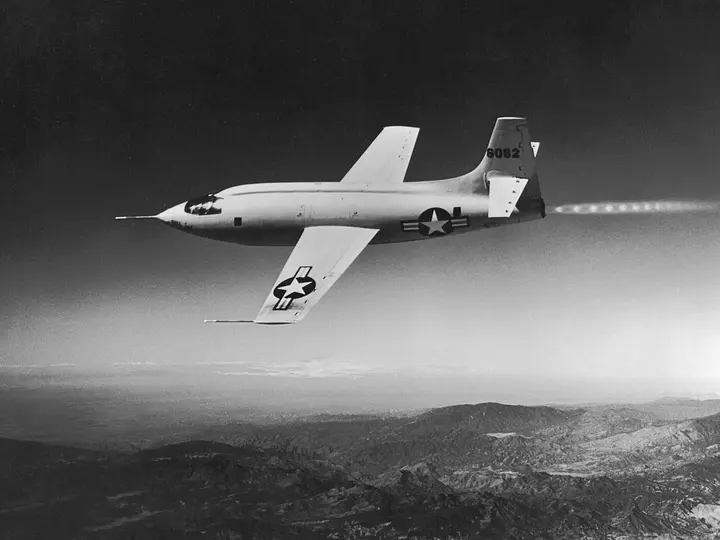
- Mach 1Chuck Yeager, two broken ribs and the Bell X-1. The sound barrier broke over the Mojave.1.06Mach
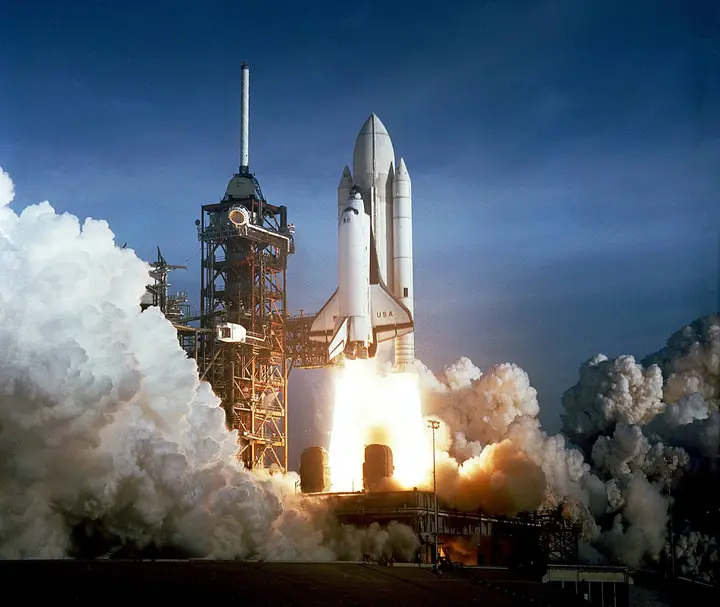
- ColumbiaTwo astronauts flew a brand-new winged spacecraft into orbit on its first flight and landed it like an airplane.1streusable spaceship
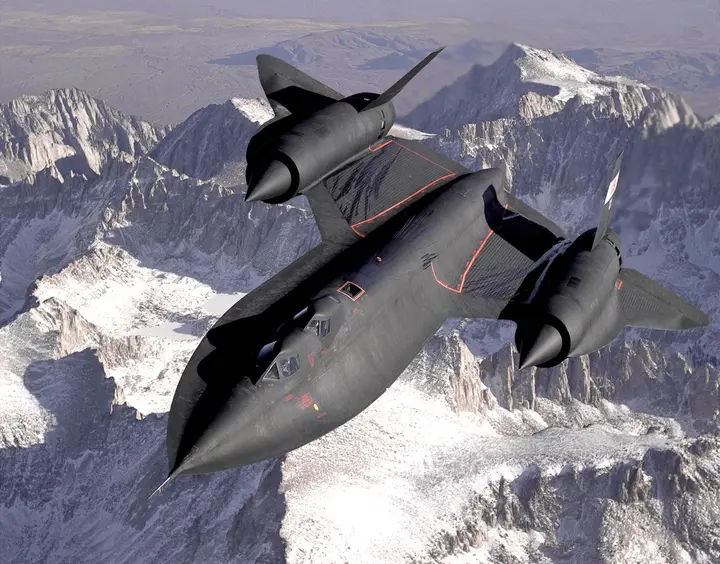
- SR-71 BlackbirdDesigned with slide rules. Still the fastest crewed air-breathing jet ever flown.3.3Mach
- Apollo 11Eight years after a president said we would, two Americans walked on the Moon.240Kmiles


Free, with no ads. Support the museum →