Washington, Cuba and the Caribbean · 28 October 1962 · Kennedy, Heyser, Lundahl, Anderson
Until Hell Freezes Over
A U-2 pilot found Soviet nuclear missiles in Cuba. Photo interpreters proved it, the Navy ringed the island, and a President made Moscow take them home.

The moment · 09:00 · 28 October 1962
Sunday morning in Washington. The quarantine has held for four days. Bombers are aloft and Navy ships hold the sea around Cuba. Then Radio Moscow reads out a message from Khrushchev to the President. The missiles are coming out.
The Soviet Government … has given a new order to dismantle the arms which you described as offensive, and to crate and return them to the Soviet Union.Nikita Khrushchev to President Kennedy, broadcast on Radio Moscow
In the summer of 1962 the Soviet Union began shipping nuclear missiles to Cuba, 90 miles from Florida, and told Washington it was doing no such thing. An Air Force U-2 caught them at it. CIA photo interpreters proved it. Then the President, the Navy and the Air Force made Moscow take them home, without a war.
Six minutes over Cuba
Maj. Richard Heyser takes off from Edwards Air Force Base, California, before midnight and flies through the night in a U-2F. Early in the morning he crosses western Cuba at 72,500 feet. In about six minutes over the island his camera takes 928 photographs. No fighter or missile rises to meet him. He lands at McCoy Air Force Base near Orlando, and a courier plane rushes the film to Washington.
Missile trailers at San Cristobal
At the National Photographic Interpretation Center, on an upper floor of a Ford dealership at Fifth and K streets in Washington, the photo interpreters bend over their light tables. Near San Cristobal they find erector-launchers, missile trailers and tents: a Soviet medium-range ballistic missile site. Two more U-2 flights that day photograph more sites. That evening the CIA calls the White House.
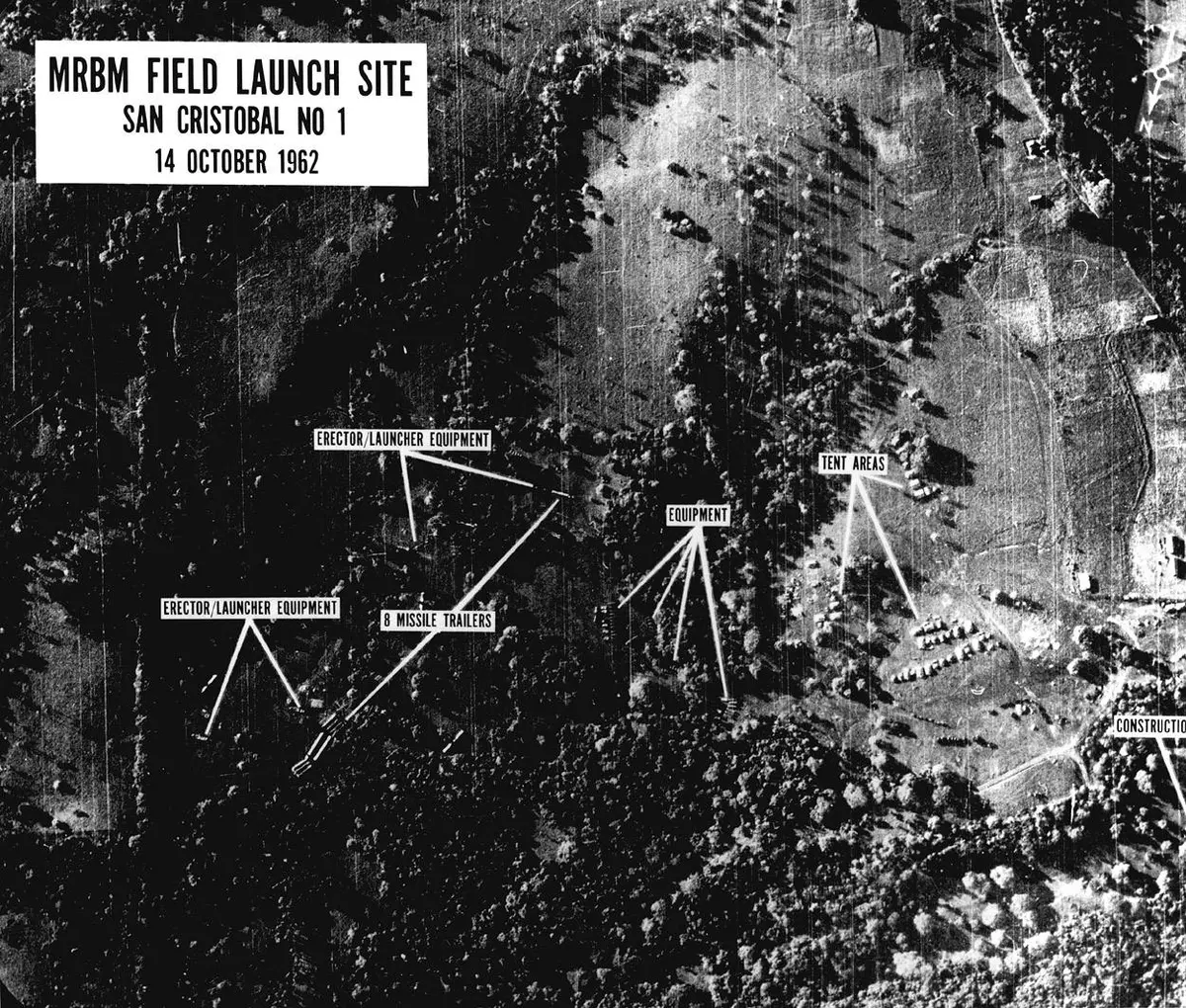
San Cristobal MRBM Field Launch Site No. 1, from Maj. Heyser's U-2 photographs of 14 October 1962, as briefed to President Kennedy on 16 October.. U.S. Air Force U-2 / John F. Kennedy Presidential Library. The President sees the evidence
At 8:45 that morning National Security Advisor McGeorge Bundy tells President Kennedy the news. At 11:50 his senior advisers gather in the Cabinet Room. Arthur Lundahl, director of the photo center, stands at the President’s shoulder with a pointer and walks him through the briefing boards. Kennedy orders more U-2 flights and keeps the discovery secret while his team weighs its answer.
The President speaks
Kennedy goes on television and radio from the Oval Office and tells the nation what the U-2 found. He announces a naval quarantine on all offensive weapons bound for Cuba. He warns that any nuclear missile launched from Cuba against any nation in the hemisphere will be met with a full retaliatory response on the Soviet Union. Then he calls on Khrushchev to take the missiles out.
President Kennedy, address to the nationTo halt this offensive buildup, a strict quarantine on all offensive military equipment under shipment to Cuba is being initiated.
Blue Moon
Cmdr. William Ecker, commanding Navy photo squadron VFP-62, takes off from Key West in an RF-8 Crusader with his wingman, Lt. Bruce Wilhelmy. They race over the missile sites of western Cuba at about 1,000 feet, cameras firing four frames a second. They land at Jacksonville and the film is flown north and read overnight. At 10:00 the next morning Lundahl shows Kennedy the new photographs in sharp detail.
The quarantine line
The quarantine takes effect. Navy destroyers, cruisers and carriers stand across the sea lanes to Cuba. Strategic Air Command goes to DEFCON 2, with one in eight of its B-52 bombers in the air at all times. At 10:25 a note reaches the President’s meeting: Soviet ships nearing the line have stopped dead in the water. Ships suspected of carrying weapons turn back toward the Soviet Union.
Until hell freezes over
In New York, Ambassador Adlai Stevenson faces Soviet Ambassador Valerian Zorin, who has denied there are any offensive missiles in Cuba. Stevenson asks him for a yes or no. Zorin says this is not a court of law. Stevenson says he will wait. Then his staff set up easels in the chamber and show the world the reconnaissance photographs.
Stevenson to Zorin, Security CouncilI am prepared to wait for my answer until hell freezes over, if that’s your decision. And I am also prepared to present the evidence in this room.
Major Anderson
Maj. Rudolf Anderson Jr. takes off from McCoy Air Force Base on his sixth mission over Cuba, alone and unarmed in a U-2. Over eastern Cuba, near Banes, a Soviet SA-2 surface-to-air missile brings his aircraft down. He is killed, the only American lost to enemy fire in the crisis. The reconnaissance flights go on.
Crate and return
Radio Moscow broadcasts Khrushchev’s answer: the missiles will be dismantled, crated and sent back to the Soviet Union. Kennedy issues a statement welcoming Khrushchev’s “statesmanlike decision.” That day he calls former President Eisenhower to tell him the news. The ships of the quarantine stay on station to watch the missiles leave.
Hear it
The Americans

Navy PT boat skipper who saved his crew in the Solomon Islands in 1943. Shown the U-2 photographs on 16 October, he chose a naval quarantine, told the nation on 22 October and held firm until Khrushchev agreed to take the missiles out.

Florida native who joined the Army Air Forces at 17 in 1944. One of only two Air Force pilots checked out in the CIA-modified U-2, he flew the 14 October mission whose 928 photographs found the Soviet missiles. He served 30 years.

University of Chicago geologist who read Navy aerial photographs of Japanese targets in World War II. He built the CIA’s photo interpretation center, and on 16 October he briefed President Kennedy on the missiles with a pointer and photo boards.

Eagle Scout and Clemson graduate from South Carolina who won two Distinguished Flying Crosses flying RF-86 Sabre reconnaissance out of Korea. He flew U-2 missions over Cuba from 15 October until a Soviet missile shot him down on 27 October.
Air Force Cross (posthumous) citation
For extraordinary heroism in connection with military operations against an armed enemy while serving as Pilot of a U-2 airplane with the 4080th Strategic Reconnaissance Wing, Strategic Air Command (SAC), from 15 October 1962 to 27 October 1962. During this period of great national crisis, Major Anderson, flying an unescorted, unarmed aircraft, lost his life while participating in one of several aerial reconnaissance missions over Cuba. While executing these aerial missions, Major Anderson made photographs which provided the United States government with conclusive evidence of the introduction of long-range offensive missiles into Cuba and which materially assisted our leaders in charting the nation's military and diplomatic course. Through his extraordinary heroism, superb airmanship, and aggressiveness in the face of the enemy, Major Anderson reflected the highest credit upon himself and the United States Air Force.
By the numbers
In pictures


Watch, listen, see
Films, photographs and first-hand accounts from across the web. Each opens in a new tab.

A 1960s Air Force Screen Magazine film: the force buildup, reconnaissance photos and the missiles leaving Cuba.
U.S. National Archives
The full public-domain recording and transcript of Kennedy’s report to the nation on the missiles in Cuba.
JFK Presidential Library
Walk through the crisis day by day with the intelligence photos, letters and recordings the President used.
JFK Presidential Library
From the CIA Museum: the U-2, its pressure suit and how it found the missiles in Cuba.
Smithsonian National Air and Space Museum
The recorded 28 October phone call in which Kennedy tells Eisenhower that Khrushchev has backed down.
John F. Kennedy Library Foundation
Naval History magazine tells the story of the crisis and the fleet that ringed Cuba.
U.S. Naval Institute
The U-2 and low-level photographs of the missile sites, from CIA photo interpreter Dino Brugioni’s collection.
National Security ArchiveHow Heyser’s 928 photographs reached the CIA’s light tables and revealed the missiles on 15 October.
Smithsonian National Air and Space MuseumRead it
Radio and Television Report to the American People on the Soviet Arms Buildup in Cuba2,406 words · Read the full text
Good evening, my fellow citizens: This Government, as promised, has maintained the closest surveillance of the Soviet military buildup on the island of Cuba. Within the past week, unmistakable evidence has established the fact that a series of offensive missile sites is now in preparation on that imprisoned island. The purpose of these bases can be none other than to provide a nuclear strike capability against the Western Hemisphere.
Upon receiving the first preliminary hard information of this nature last Tuesday morning at 9 a.m., I directed that our surveillance be stepped up. And having now confirmed and completed our evaluation of the evidence and our decision on a course of action, this Government feels obliged to report this new crisis to you in fullest detail.
The characteristics of these new missile sites indicate two distinct types of installations. Several of them include medium range ballistic missiles, capable of carrying a nuclear warhead for a distance of more than 1,000 nautical miles. Each of these missiles, in short, is capable of striking Washington, D.C., the Panama Canal, Cape Canaveral, Mexico City, or any other city in the southeastern part of the United States, in Central America, or in the Caribbean area.
Additional sites not yet completed appear to be designed for intermediate range ballistic missiles—capable of traveling more than twice as far—and thus capable of striking most of the major cities in the Western Hemisphere, ranging as far north as Hudson Bay, Canada, and as far south as Lima, Peru. In addition, jet bombers, capable of carrying nuclear weapons, are now being uncrated and assembled in Cuba, while the necessary air bases are being prepared.
This urgent transformation of Cuba into an important strategic base—by the presence of these large, long-range, and clearly offensive weapons of sudden mass destruction-constitutes an explicit threat to the peace and security of all the Americas, in flagrant and deliberate defiance of the Rio Pact of 1947, the traditions of this Nation and hemisphere, the joint resolution of the 87th Congress, the Charter of the United Nations, and my own public warnings to the Soviets on September 4 and 13. This action also contradicts the repeated assurances of Soviet spokesmen, both publicly and privately delivered, that the arms buildup in Cuba would retain its original defensive character, and that the Soviet Union had no need or desire to station strategic missiles on the territory of any other nation.
The size of this undertaking makes clear that it has been planned for some months. Yet only last month, after I had made clear the distinction between any introduction of ground-to-ground missiles and the existence of defensive antiaircraft missiles, the Soviet Government publicly stated on September 11 that, and I quote, "the armaments and military equipment sent to Cuba are designed exclusively for defensive purposes," that, and I quote the Soviet Government, "there is no need for the Soviet Government to shift its weapons . . . For a retaliatory blow to any other country, for instance Cuba," and that, and I quote their government, "the Soviet Union has so powerful rockets to carry these nuclear warheads that there is no need to search for sites for them beyond the boundaries of the Soviet Union." That statement was false.
Only last Thursday, as evidence of this rapid offensive buildup was already in my hand, Soviet Foreign Minister Gromyko told me in my office that he was instructed to make it clear once again, as he said his government had already done, that Soviet assistance to Cuba, and I quote, "pursued solely the purpose of contributing to the defense capabilities of Cuba," that, and I quote him, "training by Soviet specialists of Cuban nationals in handling defensive armaments was by no means offensive, and if it were otherwise," Mr. Gromyko went on, "the Soviet Government would never become involved in rendering such assistance." That statement also was false.
Neither the United States of America nor the world community of nations can tolerate deliberate deception and offensive threats on the part of any nation, large or small. We no longer live in a world where only the actual firing of weapons represents a sufficient challenge to a nation's security to constitute maximum peril. Nuclear weapons are so destructive and ballistic missiles are so swift, that any substantially increased possibility of their use or any sudden change in their deployment may well be regarded as a definite threat to peace.
For many years, both the Soviet Union and the United States, recognizing this fact, have deployed strategic nuclear weapons with great care, never upsetting the precarious status quo which insured that these weapons would not be used in the absence of some vital challenge. Our own strategic missiles have never been transferred to the territory of any other nation under a cloak of secrecy and deception; and our history—unlike that of the Soviets since the end of World War II—demonstrates that we have no desire to dominate or conquer any other nation or impose our system upon its people. Nevertheless, American citizens have become adjusted to living daily on the bull's-eye of Soviet missiles located inside the U.S.S.R. or in submarines.
In that sense, missiles in Cuba add to an already clear and present danger—although it should be noted the nations of Latin America have never previously been subjected to a potential nuclear threat.
But this secret, swift, and extraordinary buildup of Communist missiles—in an area well known to have a special and historical relationship to the United States and the nations of the Western Hemisphere, in violation of Soviet assurances, and in defiance of American and hemispheric policy—this sudden, clandestine decision to station strategic weapons for the first time outside of Soviet soil—is a deliberately provocative and unjustified change in the status quo which cannot be accepted by this country, if our courage and our commitments are ever to be trusted again by either friend or foe.
The 1930's taught us a clear lesson: aggressive conduct, if allowed to go unchecked and unchallenged, ultimately leads to war. This nation is opposed to war. We are also true to our word. Our unswerving objective, therefore, must be to prevent the use of these missiles against this or any other country, and to secure their withdrawal or elimination from the Western Hemisphere.
Our policy has been one of patience and restraint, as befits a peaceful and powerful nation, which leads a worldwide alliance. We have been determined not to be diverted from our central concerns by mere irritants and fanatics. But now further action is required-and it is under way; and these actions may only be the beginning. We will not prematurely or unnecessarily risk the costs of worldwide nuclear war in which even the fruits of victory would be ashes in our mouth—but neither will we shrink from that risk at any time it must be faced.
Acting, therefore, in the defense of our own security and of the entire Western Hemisphere, and under the authority entrusted to me by the Constitution as endorsed by the resolution of the Congress, I have directed that the following initial steps be taken immediately:
First: To halt this offensive buildup, a strict quarantine on all offensive military equipment under shipment to Cuba is being initiated. All ships of any kind bound for Cuba from whatever nation or port will, if found to contain cargoes of offensive weapons, be turned back. This quarantine will be extended, if needed, to other types of cargo and carriers. We are not at this time, however, denying the necessities of life as the Soviets attempted to do in their Berlin blockade of 1948.
Second: I have directed the continued and increased close surveillance of Cuba and its military buildup. The foreign ministers of the OAS, in their communique of October 6, rejected secrecy on such matters in this hemisphere. Should these offensive military preparations continue, thus increasing the threat to the hemisphere, further action will be justified. I have directed the Armed Forces to prepare for any eventualities; and I trust that in the interest of both the Cuban people and the Soviet technicians at the sites, the hazards to all concerned of continuing this threat will be recognized.
Third: It shall be the policy of this Nation to regard any nuclear missile launched from Cuba against any nation in the Western Hemisphere as an attack by the Soviet Union on the United States, requiring a full retaliatory response upon the Soviet Union.
Fourth: As a necessary military precaution, I have reinforced our base at Guantanamo, evacuated today the dependents of our personnel there, and ordered additional military units to be on a standby alert basis.
Fifth: We are calling tonight for an immediate meeting of the Organ of Consultation under the Organization of American States, to consider this threat to hemispheric security and to invoke articles 6 and 8 of the Rio Treaty in support of all necessary action. The United Nations Charter allows for regional security arrangements—and the nations of this hemisphere decided long ago against the military presence of outside powers. Our other allies around the world have also been alerted.
Sixth: Under the Charter of the United Nations, we are asking tonight that an emergency meeting of the Security Council be convoked without delay to take action against this latest Soviet threat to world peace. Our resolution will call for the prompt dismantling and withdrawal of all offensive weapons in Cuba, under the supervision of U.N. observers, before the quarantine can be lifted.
Seventh and finally: I call upon Chairman Khrushchev to halt and eliminate this clandestine, reckless, and provocative threat to world peace and to stable relations between our two nations. I call upon him further to abandon this course of world domination, and to join in an historic effort to end the perilous arms race and to transform the history of man. He has an opportunity now to move the world back from the abyss of destruction—by returning to his government's own words that it had no need to station missiles outside its own territory, and withdrawing these weapons from Cuba by refraining from any action which will widen or deepen the present crisis—and then by participating in a search for peaceful and permanent solutions.
This Nation is prepared to present its case against the Soviet threat to peace, and our own proposals for a peaceful world, at any time and in any forum—in the OAS, in the United Nations, or in any other meeting that could be useful—without limiting our freedom of action. We have in the past made strenuous efforts to limit the spread of nuclear weapons. We have proposed the elimination of all arms and military bases in a fair and effective disarmament treaty. We are prepared to discuss new proposals for the removal of tensions on both sides—including the possibilities of a genuinely independent Cuba, free to determine its own destiny. We have no wish to war with the Soviet Union-for we are a peaceful people who desire to live in peace with all other peoples.
But it is difficult to settle or even discuss these problems in an atmosphere of intimidation. That is why this latest Soviet threat—or any other threat which is made either independently or in response to our actions this week—must and will be met with determination. Any hostile move anywhere in the world against the safety and freedom of peoples to whom we are committed-including in particular the brave people of West Berlin—will be met by whatever action is needed.
Finally, I want to say a few words to the captive people of Cuba, to whom this speech is being directly carried by special radio facilities. I speak to you as a friend, as one who knows of your deep attachment to your fatherland, as one who shares your aspirations for liberty and justice for all. And I have watched and the American people have watched with deep sorrow how your nationalist revolution was betrayed—and how your fatherland fell under foreign domination. Now your leaders are no longer Cuban leaders inspired by Cuban ideals. They are puppets and agents of an international conspiracy which has turned Cuba against your friends and neighbors in the Americas—and turned it into the first Latin American country to become a target for nuclear war—the first Latin American country to have these weapons on its soil.
These new weapons are not in your interest. They contribute nothing to your peace and well-being. They can only undermine it. But this country has no wish to cause you to suffer or to impose any system upon you. We know that your lives and land are being used as pawns by those who deny your freedom.
Many times in the past, the Cuban people have risen to throw out tyrants who destroyed their liberty. And I have no doubt that most Cubans today look forward to the time when they will be truly free—free from foreign domination, free to choose their own leaders, free to select their own system, free to own their own land, free to speak and write and worship without fear or degradation. And then shall Cuba be welcomed back to the society of free nations and to the associations of this hemisphere.
My fellow citizens: let no one doubt that this is a difficult and dangerous effort on which we have set out. No one can foresee precisely what course it will take or what costs or casualties will be incurred. Many months of sacrifice and self-discipline lie ahead—months in which both our patience and our will be tested—months in which many threats and denunciations will keep us aware of our dangers. But the greatest danger of all would be to do nothing.
The path we have chosen for the present is full of hazards, as all paths are—but it is the one most consistent with our character and courage as a nation and our commitments around the world. The cost of freedom is always high—but Americans have always paid it. And one path we shall never choose, and that is the path of surrender or submission.
Our goal is not the victory of might, but the vindication of right—not peace at the expense of freedom, but both peace and freedom, here in this hemisphere, and, we hope, around the world. God willing, that goal will be achieved.
Thank you and good night.
President John F. Kennedy, the White House, 22 October 1962 · Source
“The cost of freedom is always high—but Americans have always paid it. And one path we shall never choose, and that is the path of surrender or submission.”
President John F. Kennedy, address to the nation, 22 October 1962
After
From 8 to 11 November, Navy destroyers and a cruiser came alongside nine outbound Soviet freighters and photographed the missiles on their decks. Asked by radio how many missiles were aboard, the Labinsk answered, “All on deck. See for yourself.” The count came to 42. Once Moscow agreed to remove its IL-28 bombers too, Kennedy lifted the quarantine on 20 November.
Rudolf Anderson was buried in Greenville, South Carolina, on 6 November. By the President’s personal direction he received the first Air Force Cross. On 26 November Kennedy presented Ecker’s squadron, VFP-62, with the Navy Unit Commendation in person.
Steve Heyser flew on through two combat tours in Vietnam and retired in 1974 as a lieutenant colonel, after 30 years in uniform. Art Lundahl ran the photo center until he retired in 1973.
Primary sources
- Foreign Relations of the United States, 1961–1963, Volume XI, Cuban Missile Crisis and Aftermath. Office of the Historian, U.S. Department of State.
- The Naval Quarantine of Cuba, 1962. Naval History and Heritage Command.
- Radio and Television Report to the American People on the Soviet Arms Buildup in Cuba, President John F. Kennedy, 22 October 1962. John F. Kennedy Presidential Library.
Keep exploring
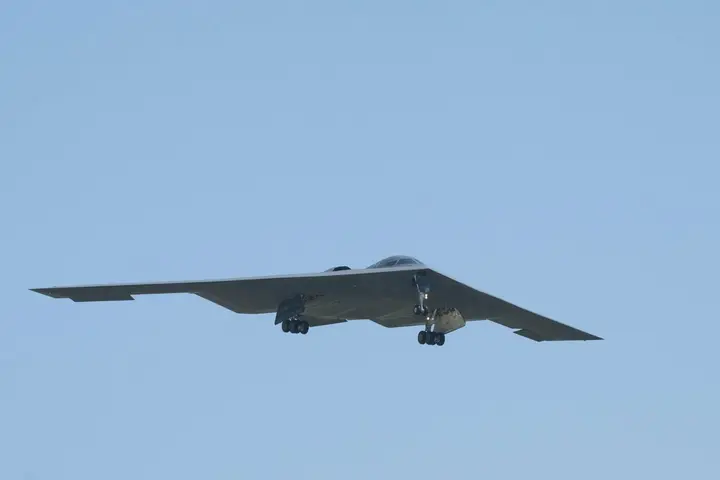
- Midnight HammerB-2 bombers flew 18 hours from Missouri and struck Iran’s buried nuclear sites with the heaviest bombs in the arsenal.14bunker busters
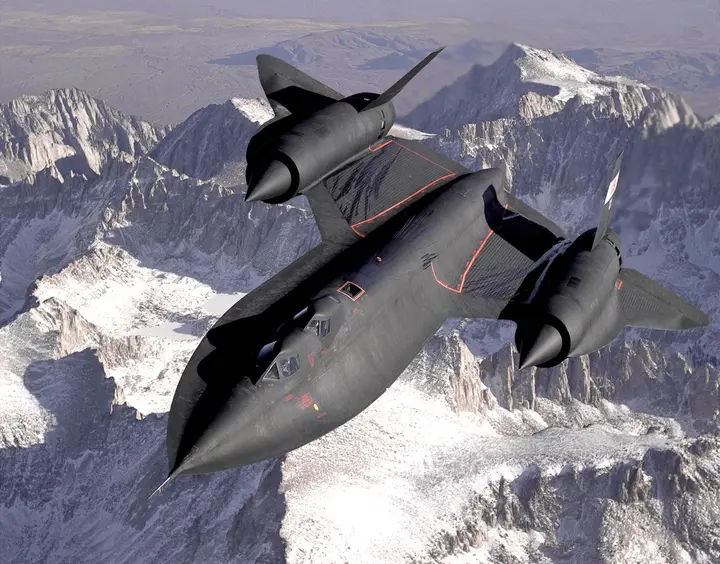
- SR-71 BlackbirdDesigned with slide rules. Still the fastest crewed air-breathing jet ever flown.3.3Mach
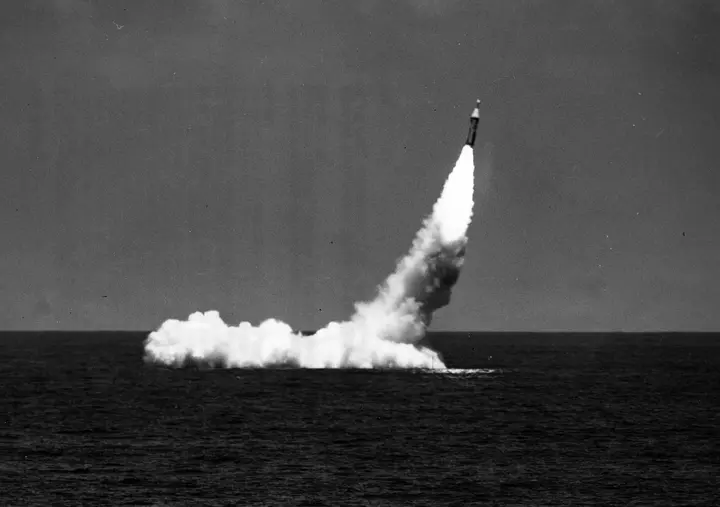
- PolarisThe Navy put a nuclear missile in a submarine and fired it from under the sea, years ahead of schedule.43months from go-ahead to first launch
- Apollo 11Eight years after a president said we would, two Americans walked on the Moon.240Kmiles


Free, with no ads. Support the museum →