Fordow, Natanz and Isfahan, Iran · 21 June 2025 · 509th and 131st Bomb Wings
It Literally Looked Like Daylight
Seven B-2 bombers flew 18 hours from Missouri, slipped into Iran unseen and put fourteen 30,000-pound bombs on its buried nuclear sites. Then they flew home.

The moment · 18:40 EDT · 21 June 2025
Seven B-2s are over Iran after 18 hours in the air. Iran’s fighters do not fly. Its missiles do not see them. At 02:10 local time, the lead bomber releases two 30,000-pound bombs on Fordow. The jets behind it see the first one go off.
This was the brightest explosion that I’ve ever seen. It literally looked like daylight.A pilot in the trailing jets, as quoted by Gen. Dan Caine
Iran buried a uranium enrichment plant inside a mountain at Fordow, about 60 miles south of Tehran, where no ordinary bomb could reach it. The President said for years that Iran would never have a nuclear weapon. On 21 June 2025 he sent the B-2s from Missouri with the only bomb built to kill that target.
One target
A Defense Threat Reduction Agency officer is brought into a vault and shown photos of a major construction project in the mountains of Iran. He and one teammate study it for more than 15 years: the geology, the vent shafts, the power, every piece of equipment going in and out. They see that no American weapon can kill it. So they help build one, the GBU-57, through hundreds of test shots and many full-scale drops.
Build and load
In a matter of weeks the plan goes from strategy to execution. Very few people in Washington know the timing. At Whiteman Air Force Base, Missouri, the 509th Maintenance Group gets about one week to build and load the GBU-57s, refuel the bombers and inspect them. The crews are active-duty Airmen and Missouri Air National Guardsmen, captains to colonels, men and women. On Friday they kiss their families goodbye, not knowing when or if they will be home.
Two directions
The B-2 force launches from Whiteman. Part of it turns west over the Pacific as a decoy, a deception known only to a handful of planners and leaders in Washington, Tampa and at Whiteman. The main package, seven B-2 Spirits with two crew members each, turns east with minimal radio traffic. For the first time, Air National Guardsmen fly in a strategic B-2 strike package.
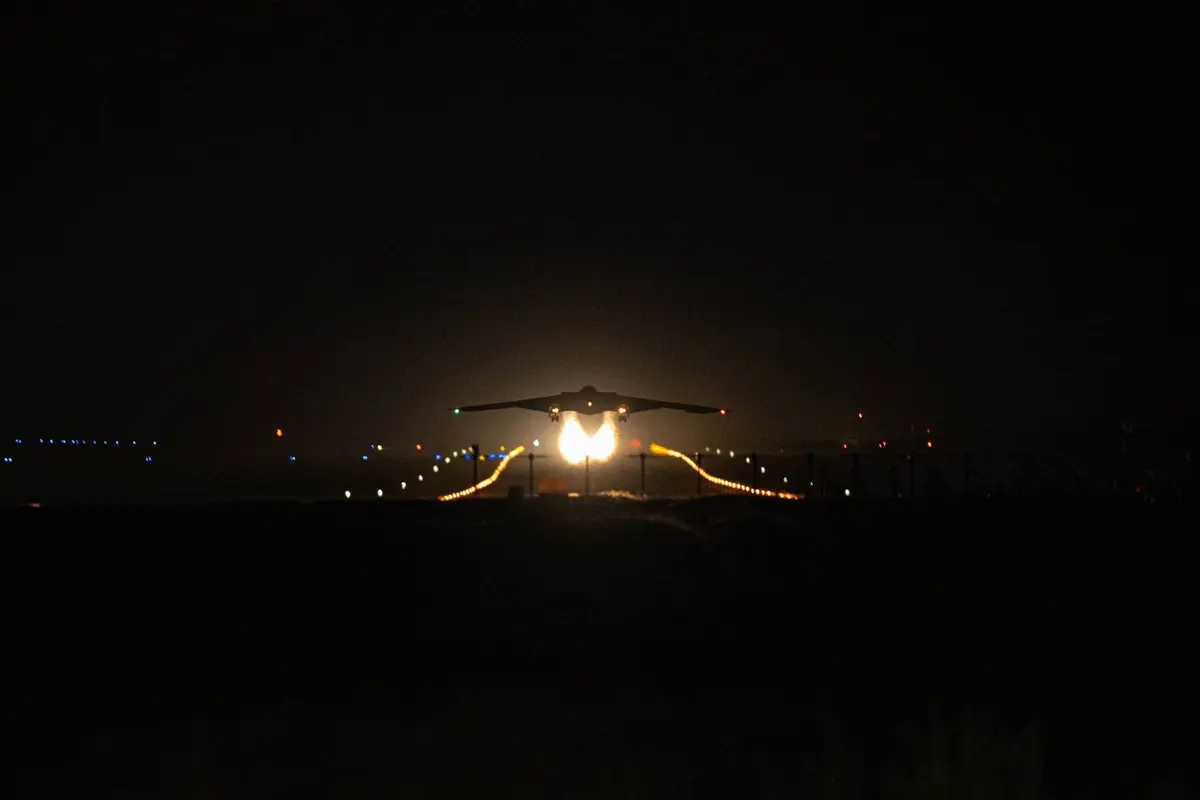
A B-2 Spirit takes off from Whiteman Air Force Base in the dark to fly Operation Midnight Hammer, June 2025. Senior Airman Bryce Moore / U.S. Air Force. Eighteen hours
The bombers cross the ocean, taking fuel again and again from dozens of tankers at aerial refueling points along the way. Once over land they meet their escorts and support aircraft in Central Command’s area, a tightly timed join-up in a narrow piece of sky with almost no talk on the radio. Gen. Caine later calls it exactly what the joint force does better than anyone in the world.
Into Iran
A U.S. guided-missile submarine fires more than two dozen Tomahawk cruise missiles at Isfahan, timed to land last. Then the strike package enters Iranian airspace. Fourth- and fifth-generation fighters race out ahead at high altitude and high speed, sweeping for enemy fighters and surface-to-air missiles and firing suppression weapons to clear the way. Strategic, Transportation, Cyber, Space and European Commands and the Space Force all support the strike.
Fordow
It is 02:10 in Iran. The lead B-2 drops two GBU-57s on the first aim point at Fordow. Days earlier, Iran capped the plant’s vent shafts with concrete. Six weapons go to each vent. The first blows off the cap. Weapons two through five drive down the shaft at more than 1,000 feet per second and explode inside. The sixth is a flex weapon, there to cover any miss. The last two of the 14 bombs hit Natanz.
A trailing pilot, as quoted by Gen. CaineThis was the brightest explosion that I’ve ever seen. It literally looked like daylight.
Unseen
By 19:05 all three sites have been hit, with the Tomahawks striking Isfahan last. The force has used about 75 precision-guided weapons, including 14 Massive Ordnance Penetrators in the weapon’s first combat use. More than 125 American aircraft took part. No shots are known to have been fired at the strike package going in or coming out. Then the bombers leave Iran and turn for home.
Gen. Dan Caine, Pentagon briefingIran’s fighters did not fly, and it appears that Iran’s surface to air missile systems did not see us.
Address to the nation
With the bombers still in the air, President Trump speaks from the White House with Vice President Vance, Secretary Rubio and Secretary Hegseth behind him. He calls the strikes a spectacular military success and says Iran’s key enrichment facilities have been completely and totally obliterated. He congratulates the great American patriots who flew those magnificent machines, and General Dan “Razin” Caine.
Home to Whiteman
At the Pentagon that morning, Secretary Hegseth calls it the longest B-2 mission since 2001 and the first combat use of the MOP. That day the bombers come home after about 36 hours and more than 13,000 miles. They join up as a flight of four and a flight of three, pitch out over Whiteman and land to the cheers of their families. Gen. Caine: flags flying and tears flowing.

The command

The 45th and 47th President. For years he said Iran must never have a nuclear weapon. He gave Iran 60 days to negotiate, then ordered the strike, watched it from the Situation Room and told the nation that night.

Commissioned through ROTC at the Virginia Military Institute in 1990. F-16 pilot and weapons officer with 2,800 flight hours, more than 150 in combat. Ten weeks into the job when the order came, he oversaw the plan and briefed it to the world.

West Point, 1988. Ranger and paratrooper who commanded the 75th Ranger Regiment, the 82nd Airborne Division and the XVIII Airborne Corps, and holds the Purple Heart with Oak Leaf Cluster. His command executed Midnight Hammer and guarded every base in the region.

Commissioned through ROTC at the University of Washington in 2003. B-2 and C-17 instructor pilot. His wing, with the Guard’s 131st, launched the seven bombers and the 4,000 Airmen behind them.
By the numbers
In pictures


Watch, listen, see
Films, photographs and first-hand accounts from across the web. Each opens in a new tab.

Secretary Hegseth and Gen. Caine walk through Midnight Hammer, map and timeline, the morning after.
Department of War
Full transcript of the 22 June 2025 Pentagon briefing on the decoy, the route and the bombs.
Department of WarGen. Caine explains how the bombs went down Fordow’s shafts and tells the story of the crews.
Department of War
How two DTRA officers studied Fordow for 15 years and helped build the bomb to reach it.
DoD News
Air Force and DTRA test footage of the 30,000-pound Massive Ordnance Penetrator.
Air Force Television
Seven B-2 Spirits prepare at Whiteman, launch for Midnight Hammer and come home, 20 to 22 June 2025.
509th Bomb Wing
President Trump announces the strikes on Fordow, Natanz and Isfahan on the night of 21 June.
The White House
Air Force Weapons School graduates describe how their training let them plan and fly Midnight Hammer.
U.S. Air Force“There’s no military in the world that could have done what we did tonight. Not even close.”
President Donald J. Trump, address to the nation, 21 June 2025
After
Two days later Iran fired missiles at Al Udeid Air Base in Qatar. About 44 American soldiers on two Patriot batteries, the oldest a 28-year-old captain, defended the base alongside Qatari crews in what Gen. Caine called the largest single Patriot engagement in U.S. military history. A ceasefire followed, and Secretary Hegseth said the strike had brought the end of the 12-day war.
On 22 June Gen. Caine reported that “initial battle damage assessments indicate that all three sites sustained extremely severe damage and destruction.” Four days later Secretary Hegseth told the press: “This was an historically successful attack, and we should celebrate it as Americans.”
The Secretary of the Air Force and the Chief of Staff flew to Whiteman in July 2025 to thank the Airmen. Airmen who flew in the support package received the Distinguished Flying Cross.
Primary sources
- Secretary of Defense Pete Hegseth and Chairman of the Joint Chiefs of Staff General Dan Caine Hold a Press Conference. Transcript, 22 June 2025.
- Defense Secretary Pete Hegseth and Joint Chiefs of Staff Chairman Gen. Dan Caine Hold News Conference. Transcript, 26 June 2025.
- SecAF, CSAF visit Whiteman AFB following Operation Midnight Hammer. 509th Bomb Wing Public Affairs, 14 July 2025.
Keep exploring
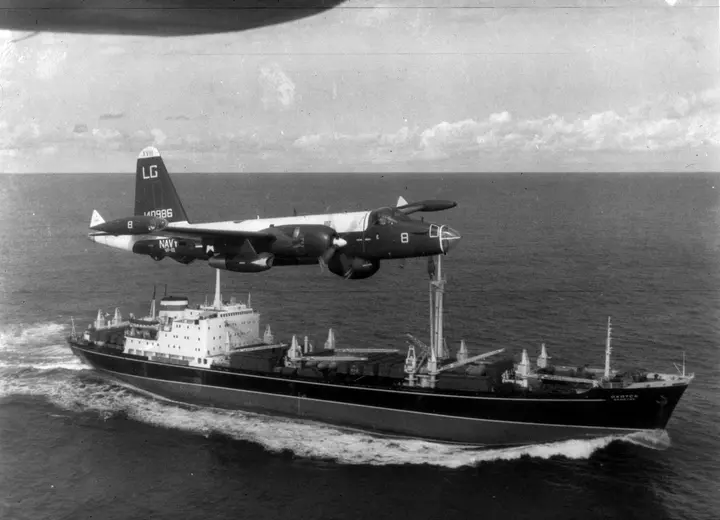
- Thirteen DaysU-2 photographs found Soviet missiles in Cuba. A naval quarantine and a steady President sent them home without a war.13days
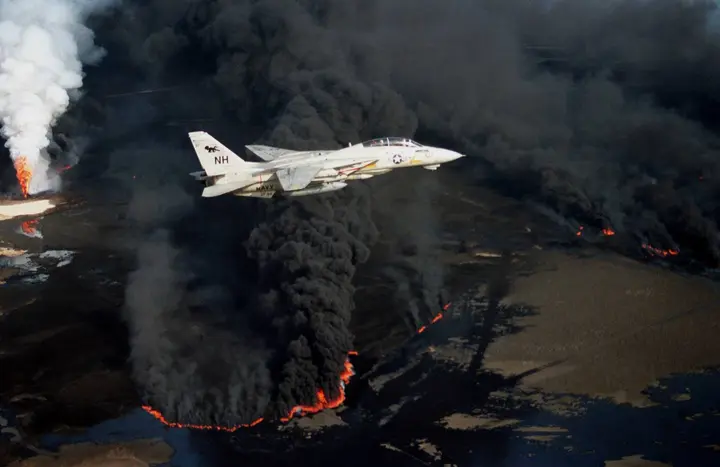
- The 100-Hour WarThe ground war to free Kuwait ended in 100 hours. Iraq’s army, then billed as the world’s fourth-largest, was routed.100hours
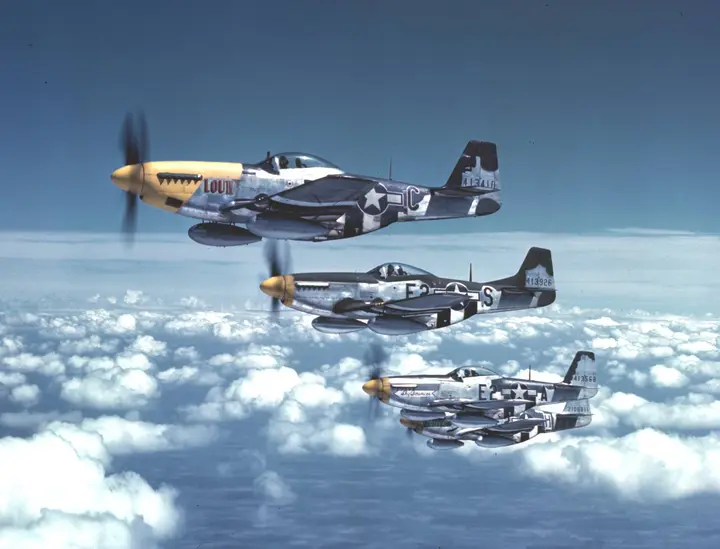
- The P-51 MustangNorth American Aviation rolled out a brand-new fighter 102 days after the British signed the contract. Its Mustangs escorted the bombers all the way to Berlin.102days, contract to rollout
- MidwaySix months after Pearl Harbor, American dive bombers set three Japanese carriers burning in a few minutes. Before dark they got the fourth.4carriers sunk


Free, with no ads. Support the museum →