Coloma, California · 24 January 1848 · The forty-niners
Gold from the American River!
A carpenter looked down into a millrace and saw gold. Three hundred thousand people followed him west, and California became a state in two and a half years.

The moment · Morning · 24 January 1848
Water has run through the new tailrace all night. James Marshall walks the ditch below Sutter’s sawmill. Something glints on the bedrock under six inches of water. He scoops up the flakes, pounds one flat on a rock, and turns to his crew.
Boys, by God, I believe I’ve found a gold mine.James Marshall, to the mill crew
In January 1848 California was the far edge of the continent, newly won from Mexico, with a few thousand settlers and a village called San Francisco. Then a carpenter building a sawmill for John Sutter looked down into his tailrace. Within a year the President confirmed the news to Congress, and the largest migration in American history to that time was under way.
Something shining in the ditch
On the South Fork of the American River at Coloma, James Marshall is building a sawmill for John Sutter with a crew of Mormon Battalion veterans and local Indian laborers. Each night they flush the tailrace to deepen it. This morning Marshall sees shiny flakes on the bedrock. He pounds them on a rock and they flatten. The camp cook, Jenny Wimmer, boils one in lye soap. It passes every test.
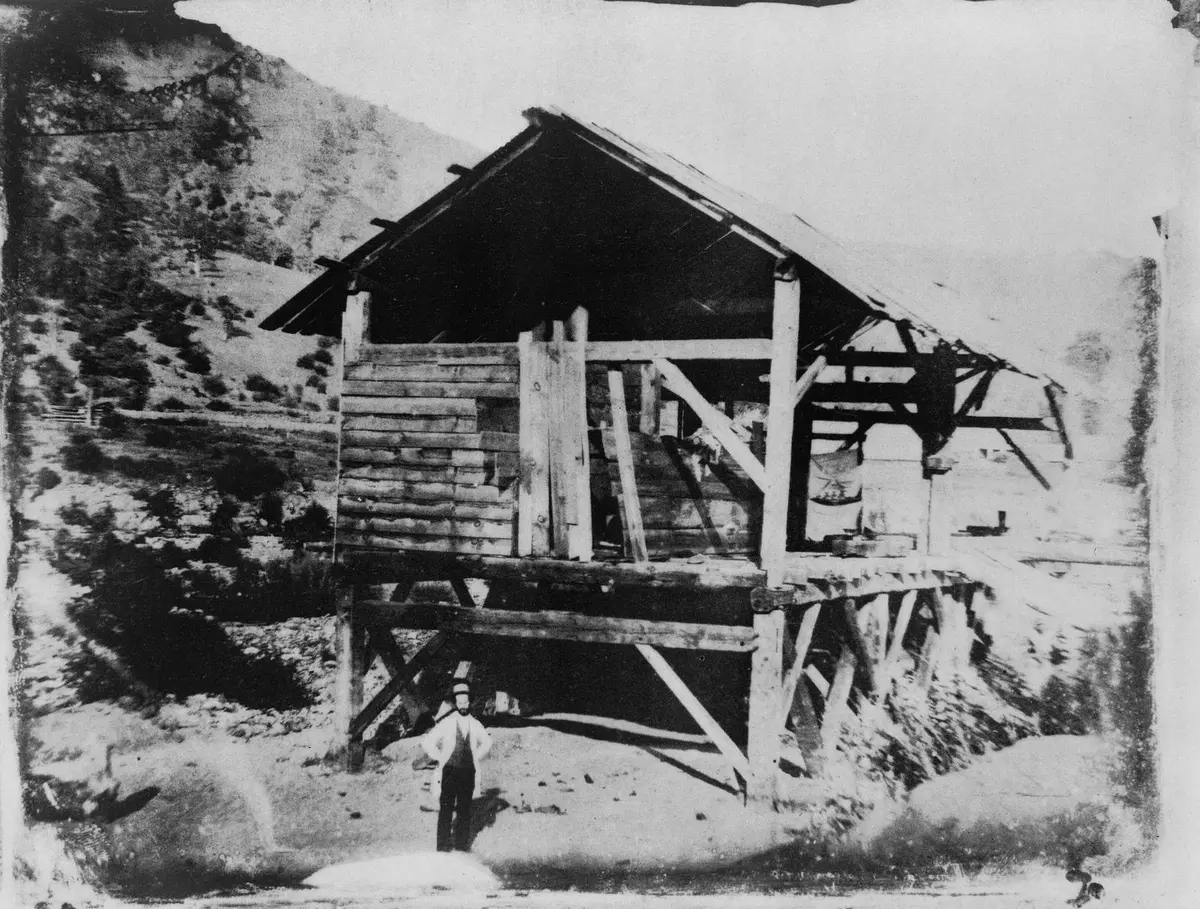
James Marshall stands in front of Sutter’s sawmill at Coloma, where he found gold in the tailrace, about 1850.. R. H. Vance (attributed) / Library of Congress. Henry Bigler’s diary, Monday 24thThis day some kind of mettle was found in the tail race that looks like goald, first discovered by James Martial, the Boss of the Mill.
Gold of the finest quality
Four days later Marshall rides to Sutter’s Fort on a rainy afternoon, soaked through, and asks to see Sutter alone. He sets out about two ounces of flakes. Sutter tries them with aqua fortis from his apothecary shop and reads the long article on gold in the Encyclopedia Americana. His verdict: gold of at least 23 carats. Five days after that, the treaty ending the war with Mexico makes California American soil.
The news breaks
Sam Brannan runs the store at Sutter’s Fort and owns San Francisco’s first newspaper. He walks the streets of San Francisco waving a quinine bottle full of gold dust. By the end of May the town is reported half empty, its able-bodied men gone to the diggings. From 1 May to 10 July his store takes in $36,000 in gold.
Sam Brannan, in the streets of San FranciscoGold! Gold! Gold from the American River!
The Army’s report
Col. Richard B. Mason, the military governor, tours the gold country in July and counts more than 4,000 people at work, taking out $30,000 to $50,000 in gold a day. His report says the rivers hold more gold than will pay the cost of the war with Mexico a hundred times over. Lt. Lucien Loeser carries it east by way of Panama, with a tea caddy holding about 230 ounces of gold.
The President confirms it
President James K. Polk sends his annual message to Congress. He reports the gold as fact, backed by officers who saw it with their own eyes, and asks for a branch of the U.S. Mint in California. Rumor turns into a national rush. The Philadelphia Mint strikes 1,389 quarter eagles from Mason’s gold and stamps each one CAL.
President Polk, annual message to CongressThe explorations already made warrant the belief that the supply is very large and that gold is found at various places in an extensive district of country.
The forty-niners
They come every way they can. About half go by sea, months around Cape Horn or across the Isthmus of Panama by canoe and mule. The steamship California reaches San Francisco on 28 February 1849 with gold seekers picked up in Panama, and all but one of her crew desert for the mines. On land, 25,000 emigrants take the 2,000-mile California Trail in 1849 alone.
An instant city
San Francisco had fewer than 1,000 people before the rush. By the end of 1849 it has 25,000. Ships lie abandoned by the hundreds in Yerba Buena Cove while their crews dig for gold. The new Californians do not wait for Congress. From 1 September to 13 October, 48 delegates meet at Colton Hall in Monterey and write a constitution that bans slavery. Voters ratify it in November.
The 31st state
President Millard Fillmore signs the act admitting California to the Union as the 31st state. The news takes 39 days to arrive. On 18 October the Pacific Mail steamer Oregon steams into the bay with the word. Business stops, the courts adjourn in the middle of their work, and the city pours into the streets and down to the wharves to celebrate.
Built to last
The rush builds companies as well as fortunes. Henry Wells and William Fargo found Wells, Fargo & Co. on 18 March 1852 and open in San Francisco that July to bank and carry gold. A branch Mint opens there on 3 April 1854. Levi Strauss arrives in 1853 to sell dry goods to the mining towns. In 1873 he and Reno tailor Jacob Davis patent the copper-riveted work pant. The world calls it the blue jean.
The people

New Jersey carpenter who came to California in 1845 and served in Frémont’s California Battalion in 1846. Partnered with John Sutter to build a sawmill at Coloma and spotted the flakes in its tailrace that started the Gold Rush.

Printer who brought a shipload of Mormon colonists to Yerba Buena in 1846 and founded San Francisco’s first newspaper. Ran the store at Sutter’s Fort, carried the news to San Francisco, and became the richest man in early California.

Tennessean who won the war that brought California under the American flag. His 5 December 1848 message to Congress confirmed the gold with Army reports and sent the nation west. He died in June 1849, three months after leaving office.

Bavarian-born merchant who joined his family’s dry goods trade in New York, then came to San Francisco in 1853 to supply the West. With Jacob Davis he patented riveted work pants in 1873, the first blue jeans.
By the numbers
In pictures


Watch, listen, see
Films, photographs and first-hand accounts from across the web. Each opens in a new tab.

How the rush of 1849 carried California from frontier territory to statehood in record time.
Smithsonian Channel
A park ranger tells the discovery story beside the full-size replica of Sutter’s sawmill at Coloma.
Marshall Gold Discovery SHP
HISTORY’s short take on the rush west, from its series America: The Story of Us.
HISTORY
Levi’s own documentary on the riveted work pant born in Gold Rush San Francisco.
Levi Strauss & Co.
The flake believed to be Marshall’s first find, carried to Washington in 1848 and held by the Smithsonian since 1861.
Smithsonian NMAHThe full text of the 5 December 1848 message that confirmed the gold to the nation.
American Presidency Project
The military governor’s August 1848 report from the diggings, with his counts of men and gold.
Museum of the City of San FranciscoJacob Davis’s own testimony on inventing the riveted pant he patented with Levi Strauss.
National Archives“The accounts of the abundance of gold in that territory are of such an extraordinary character as would scarcely command belief were they not corroborated by the authentic reports of officers in the public service.”
President James K. Polk, annual message to Congress, 5 December 1848
After
California produced about $550 million in gold in its first decade. The Great Seal its founders adopted in 1849 shows a miner at work beside the river and carries one word: Eureka.
In 1890 the state raised a statue of James Marshall on the hill above the discovery site, California’s first State Historic Monument. His bronze figure points down to the spot on the river where he found the gold. A full-size replica of Sutter’s sawmill stands at Marshall Gold Discovery State Historic Park in Coloma.
The businesses the rush built are still here. Wells Fargo still carries the name of its two founders. Levi Strauss & Co. still has its headquarters in San Francisco, and the riveted jean it first made for miners is worn in every corner of the world.
Primary sources
- James K. Polk, Fourth Annual Message to Congress, 5 December 1848. The American Presidency Project.
- Col. Richard B. Mason, report on the gold region to the Adjutant General, 17 August 1848.
- Marshall Gold Discovery State Historic Park, including Henry Bigler’s diary for 24 January 1848. California State Parks.
Keep exploring
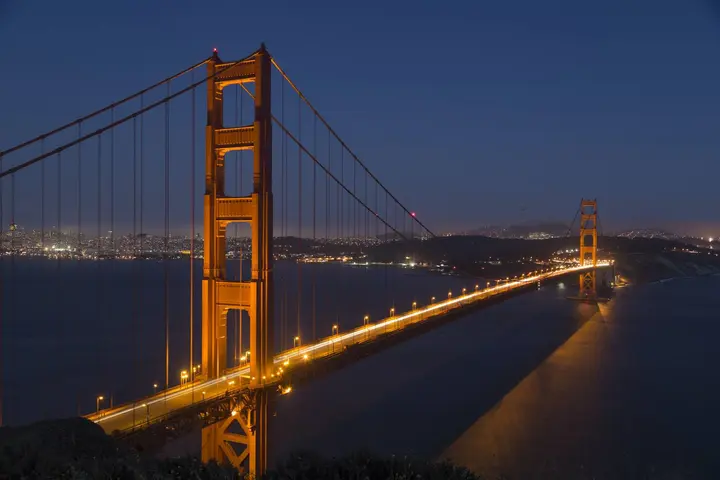
- The Golden Gate BridgeThey said it couldn’t be built across the Golden Gate. It was the longest suspension span in the world for 27 years.4,200feet of span
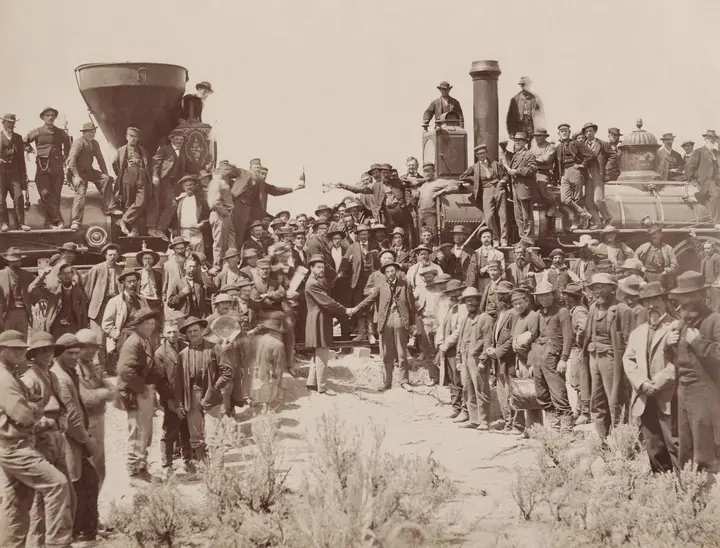
- The Golden SpikePromontory Summit, Utah. A trip that took months by wagon now took about a week.7days coast to coast
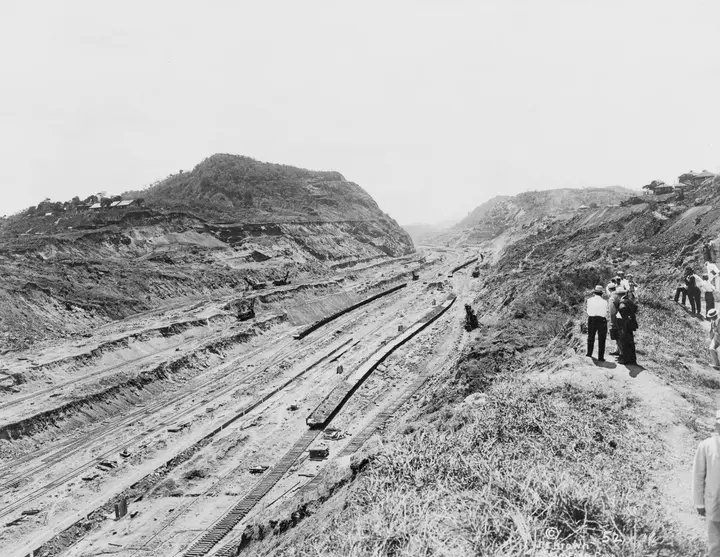
- The Panama CanalWhere France failed, America cut through the Continental Divide and joined two oceans.10years to build
- The Pony ExpressYoung riders galloped mail from Missouri to California in ten days, through blizzards, deserts and hostile country.1,966miles in 10 days


Free, with no ads. Support the museum →