Griffin’s Wharf, Boston, Massachusetts · 16 December 1773 · The Sons of Liberty
An Epocha in History
Parliament sent three shiploads of taxed tea. Boston met, asked the governor for a way out and got a no. That night the colonists emptied every chest into the harbor and left everything else alone.

The moment · About 18:00 · 16 December 1773
Francis Rotch is back from Milton with the governor’s refusal. In the Old South Meeting House, thousands go quiet. Samuel Adams rises and says the meeting can do nothing more to save the country. A cry goes up in the hall. Men with blackened faces head for Griffin’s Wharf.
In 1773 Parliament offered Americans cheap tea with a tax built in. Boston’s answer came in two parts: a town meeting in the largest hall in the city, then three ships at Griffin’s Wharf. The men who did it broke open the tea and nothing else. Within a year, twelve colonies had sent delegates to a Congress.
The Tea Act
Parliament passes the Tea Act to rescue the East India Company, which has about 17 million pounds of unsold tea in its warehouses. The Company may now ship tea straight to the colonies and undercut every merchant. The Act keeps the three-pence-a-pound Townshend duty. Colonial leaders see the point at once: drink the cheap tea and Americans accept a tax Parliament set without their vote.
The Dartmouth arrives
The Dartmouth anchors at Griffin’s Wharf with 114 chests of tea. Boston’s tea consignees, including two sons of Governor Thomas Hutchinson, have already refused to resign. The next morning a mass meeting votes that the tea must go back without the duty paid. The Eleanor and the Beaver arrive over the next two weeks. The clock starts: under customs law the cargo must be landed within twenty days.
Old South Meeting House
Thousands pack Boston’s largest building and crowd the street outside. Francis Rotch, owner of the Dartmouth and the Beaver, has been sent to Milton to ask Governor Hutchinson for a pass to sail the tea back to England. Through the afternoon the meeting waits. Josiah Quincy Jr., a 29-year-old lawyer, tells the crowd the real question is what they are ready to do, not how loudly they can cheer.
The governor says no
Rotch returns after dark. Hutchinson will not give the pass, and the guns of Castle William and two warships cover the channel out. A cry goes up in the hall. Samuel Adams stands and says there is nothing more the meeting can do to save the country. Many hear it as the signal. The crowd spills into the street, and war whoops answer from the dark.
Mohawks at the wharf
Men in blankets, with soot or paint on their faces and hatchets in their hands, walk down to Griffin’s Wharf. They split into three parties, one per ship. At each, a leader demands the keys to the hatches and some candles from the captain, who hands them over. Guards hold the wharf so no one interferes. The Massachusetts Historical Society puts the number at between 30 and 60 men.
Three ships, three hours
The crews open the hatches and hoist the chests onto the decks with the ships’ own tackle. They split each one with hatchets and tip the tea over the side. A crowd watches from the wharf. At low tide the tea heaps up in the shallows, and the next morning small boats beat the floating mass under with oars until nothing is left to save.
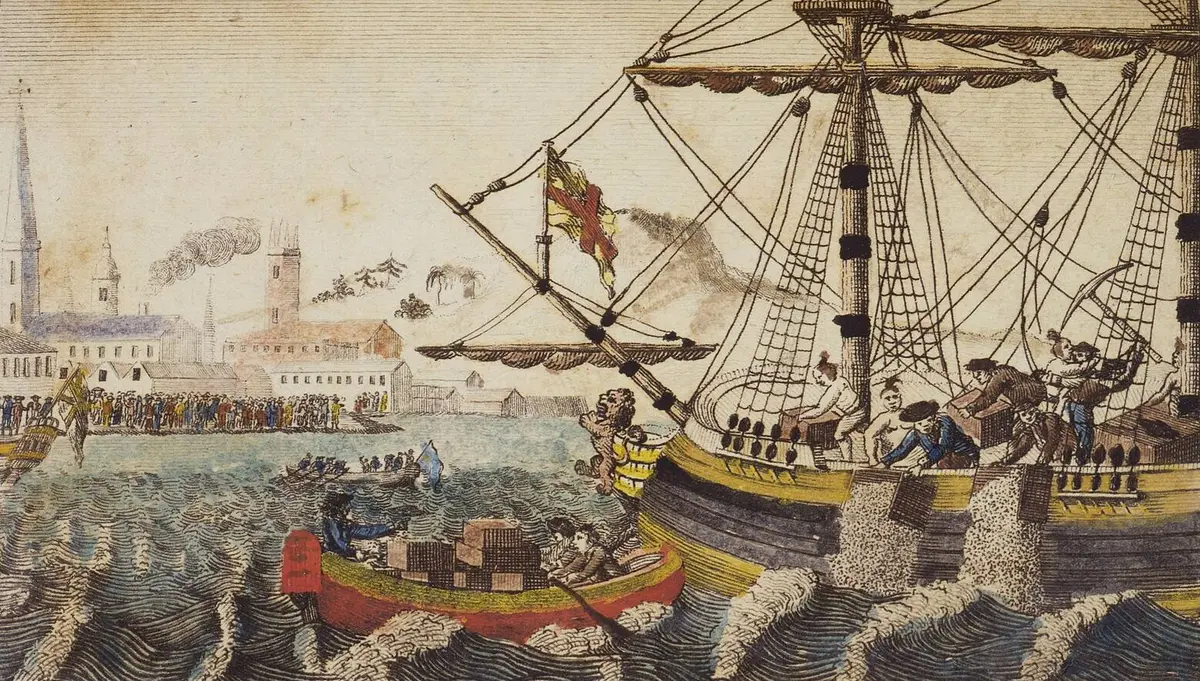
Americans Throwing the Cargoes of the Tea Ships into the River, at Boston: the earliest known print of the Tea Party, an engraving of 1789 (detail).. Library of Congress, Prints and Photographs Division. George Hewes, recalling his ship, 1834In about three hours from the time we went on board, we had thus broken and thrown overboard every tea chest to be found in the ship.
Only the tea
Nothing else on the three ships is touched. The ships’ cargoes, the captains’ property and the vessels themselves stay as they were. One padlock is broken, and the men replace it the next day. A man caught pocketing tea is made to run a gauntlet down the wharf. The point has been made, and the men keep it narrow: this is a protest against a tax, not a riot.
An Epocha in History
John Adams, who was not at the wharf, writes in his diary the next day that the destruction is bold, daring and firm, and will have lasting consequences. Paul Revere mounts up to carry the news to New York and Philadelphia. The news spreads faster than any ship can carry it, and other ports take note.
John Adams, diary, 17 December 1773This Destruction of the Tea is so bold, so daring, so firm, intrepid and inflexible, and it must have so important Consequences, and so lasting, that I cant but consider it as an Epocha in History.
The road to Congress
Parliament answers in the spring of 1774 with the Coercive Acts. The Boston Port Act closes the harbor on 1 June until the tea is paid for. Three more acts reshape Massachusetts government, courts and quartering. Other colonies send food and money to Boston and call for a Congress. On 5 September 1774, delegates from twelve colonies meet at Carpenters’ Hall in Philadelphia.

The men behind it

Clerk of the Massachusetts House and the driving force behind Boston’s Committee of Correspondence. He worked the autumn meetings against the tea and, on 16 December, told the crowd the meeting could do nothing more to save the country. He later signed the Declaration.

Joined the party at Griffin’s Wharf, demanded the keys to a ship’s hatches from its captain and helped break open the chests. In 1834 he gave the best first-hand account of that night, as one of its last survivors.

Boston silversmith and Son of Liberty, already a courier for the town’s committees. He carried word of the Tea Party by horse to New York and Philadelphia, one of the rides he made for Boston before the one in 1775.
By the numbers
In pictures


Watch, listen, see
Films, photographs and first-hand accounts from across the web. Each opens in a new tab.

Historian Sarah Kay Bierle walks through the tea, the meeting and the night at Griffin’s Wharf.
American Battlefield Trust
A guided walk aboard the Boston Tea Party ships and museum at Griffin’s Wharf.
American Battlefield TrustShip arrivals, the town meetings and the night itself, with sources from the Society’s collection.
Massachusetts Historical SocietyThe 1834 memoir of shoemaker George Hewes, who took part, told from his own recollection.
Internet Archive
The hall where thousands met on 16 December 1773, and a stop on Boston’s Freedom Trail.
National Park Service
The Tea Act, the three ships, the meeting and the Coercive Acts that followed.
American Battlefield TrustWalk the decks of a replica Beaver at Griffin’s Wharf, where the tea went over the side.
Boston Tea Party Ships & Museum“This Destruction of the Tea is so bold, so daring, so firm, intrepid and inflexible, and it must have so important Consequences, and so lasting, that I cant but consider it as an Epocha in History.”
John Adams, diary, 17 December 1773
After
The tea was gone and the colonies were watching. Parliament answered with the Coercive Acts, and Boston’s neighbors answered back. Towns across New England sent sheep, grain and money to Boston, and Virginia’s House of Burgesses set aside a day of prayer. Committees of correspondence grew into a continent-wide network.
On 5 September 1774, the First Continental Congress opened at Carpenters’ Hall in Philadelphia with delegates from twelve colonies. Samuel Adams and John Adams were among Massachusetts’s four. The Congress adopted a trade boycott and a plan to meet again. The next time, in May 1775, the fighting had already started at Lexington and Concord.
The men at Griffin’s Wharf never lost their pride in what they had done. George Hewes lived to see Boston honor him on the Fourth of July 1835. A bronze plaque on Atlantic Avenue marks the wharf, and every December Bostonians gather at the Old South Meeting House and walk to the harbor.
Primary sources
- John Adams, diary entry of 17 December 1773. The Adams Papers, Massachusetts Historical Society.
- [James Hawkes], A Retrospect of the Boston Tea-Party, with a Memoir of George R. T. Hewes. New York, 1834.
- The Boston Tea Party. Massachusetts Historical Society.
Keep exploring
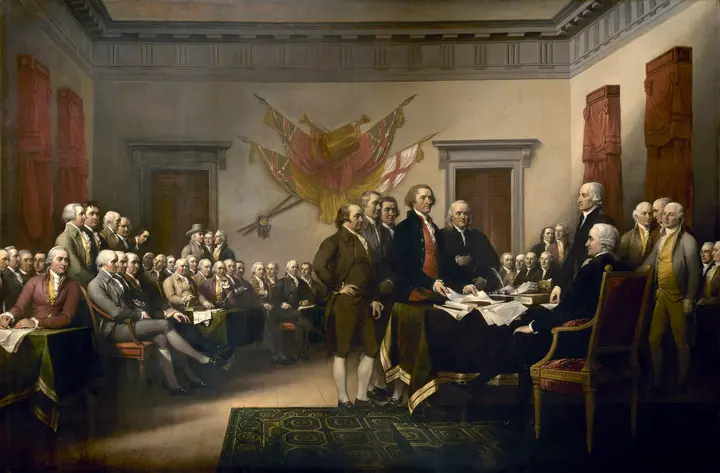
- The DeclarationFifty-six men signed their names to treason against the Crown and pledged their lives, fortunes and sacred honor.56signers
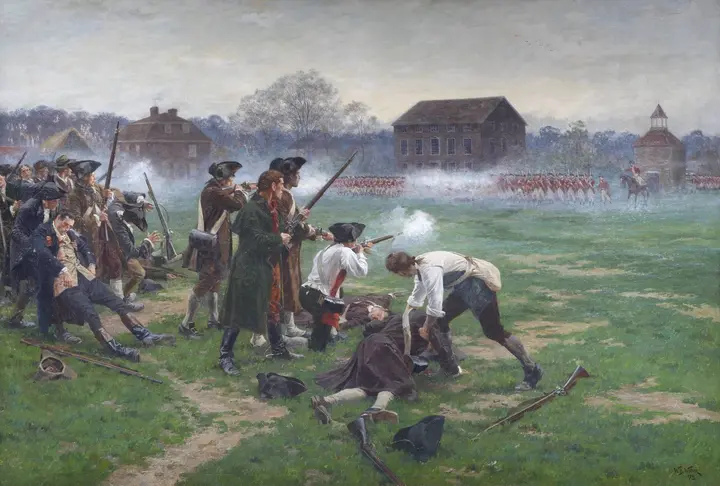
- The Shot Heard Round the WorldFarmers turned out in the night, fired back at the North Bridge, and chased the King’s regulars 18 miles back to Charlestown.~4,000militiamen
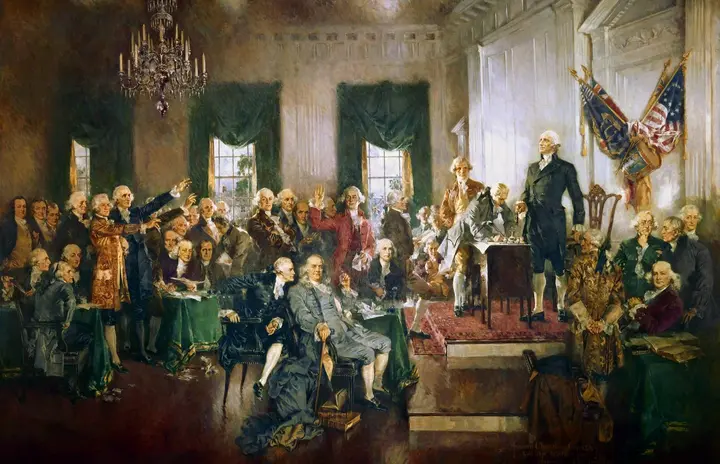
- The ConstitutionThirty-nine delegates signed the plan for a government of the people. It is the oldest written national constitution still in force.39signers
- The Gibraltar of the New World FallsAbout 4,000 New England militia under a Maine merchant, backed by the Royal Navy, dragged their guns through the bog and took France’s greatest fortress in North America.47days to take Louisbourg


Free, with no ads. Support the museum →