Philadelphia · 17 September 1787 · The Federal Convention
We the People
Fifty-five delegates met in secret in Philadelphia and argued all summer. Thirty-nine of them signed four pages that still govern the nation.

The moment · 17 September 1787 · Philadelphia
Four months of argument are over. The last delegates are bending over the parchment to sign. Benjamin Franklin, 81, looks at the gilded half sun on the back of Washington’s chair. All summer he could not tell if it was rising or setting. Now he knows.
But now at length I have the happiness to know that it is a rising and not a setting Sun.Benjamin Franklin, as recorded by James Madison
Four years after winning its independence, the United States was coming apart. Congress under the Articles of Confederation could not tax, could not regulate trade and could not make the states keep their word. In May 1787 twelve states sent delegates to Philadelphia to fix it. Behind closed doors they threw out the old plan and wrote a new government from scratch.
Washington in the chair
The Convention was called for 14 May, but only a few delegates came on time. On 25 May seven states finally make a quorum in the Pennsylvania State House. Robert Morris nominates George Washington as President, and the vote is unanimous. Four days later the delegates rule that nothing spoken in the House may be printed or passed on. James Madison takes a seat in front of the chair and starts writing everything down.
Two plans
Governor Edmund Randolph opens with the Virginia Plan, fifteen resolutions shaped by Madison. It calls for a national government with a legislature, an executive and courts, with representation by population. On 15 June William Paterson of New Jersey answers for the small states with a plan to keep one state, one vote. On 19 June the delegates choose Virginia’s plan, seven states to three. The Articles will not be patched. They will be replaced.
Franklin calls for prayer
The fight over representation has turned bitter. Franklin, 81, reminds the delegates that during the war Congress prayed daily in this same room, and that those prayers were answered. He moves that each morning’s session open with prayer. “I have lived, Sir, a long time,” he says, “and the longer I live, the more convincing proofs I see of this truth, that God governs in the affairs of men.”
A full stop
The small states demand an equal vote for every state in the Senate. On 2 July the question is called. Georgia’s two delegates split, and the states tie, five to five. “We are now at a full stop,” says Roger Sherman of Connecticut, but nobody means to go home with nothing. The Convention hands the problem to a committee of one delegate from each state, Franklin among them, and adjourns for the Fourth of July.
The Great Compromise
The answer is the one Sherman offered back in June. Seats in the House will follow population. In the Senate every state gets an equal vote. Connecticut, New Jersey, Delaware, Maryland and North Carolina vote yes. Pennsylvania, Virginia, South Carolina and Georgia vote no. Massachusetts splits. Five to four, it passes. The large states accept the result, and the Convention holds together.
The first draft
Everything agreed so far goes to a Committee of Detail: John Rutledge, Edmund Randolph, Nathaniel Gorham, Oliver Ellsworth and James Wilson. The Convention adjourns for ten days while they write. On 6 August they report the first full draft, 23 articles long. It opens with “We the people of the States of” and then names all thirteen, one by one. Through August the delegates take it apart line by line.
We the People
A Committee of Style gets the last job: William Samuel Johnson, Alexander Hamilton, Gouverneur Morris, Madison and Rufus King. Morris holds the pen. The committee boils 23 articles down to seven. Morris drops the list of states and writes “We the People of the United States.” The draft comes back on 12 September. On the 15th every state votes yes, and Jacob Shallus, a Pennsylvania Assembly clerk, writes it out on parchment.
With all its faults
The parchment is read aloud. Franklin has written out a speech, and James Wilson reads it for him. Franklin admits there are parts he does not approve, then asks every member to doubt a little of his own infallibility and sign. Washington, for the only time all summer, speaks his own mind from the chair: allow one representative for every 30,000 people, not 40,000. It passes without objection. Then every state votes yes.
Franklin’s speech, read by James WilsonI agree to this Constitution with all its faults, if they are such; because I think a general Government necessary for us.
A rising sun
Washington’s name goes at the top. The rest sign by state. George Read signs for his ailing Delaware colleague John Dickinson. Alexander Hamilton signs alone for New York. Three refuse: Edmund Randolph, George Mason and Elbridge Gerry. As the last men sign, Franklin looks at the half sun on Washington’s chair and tells the men near him that he finally knows it is rising. Thirty-nine names. The Convention adjourns for good.
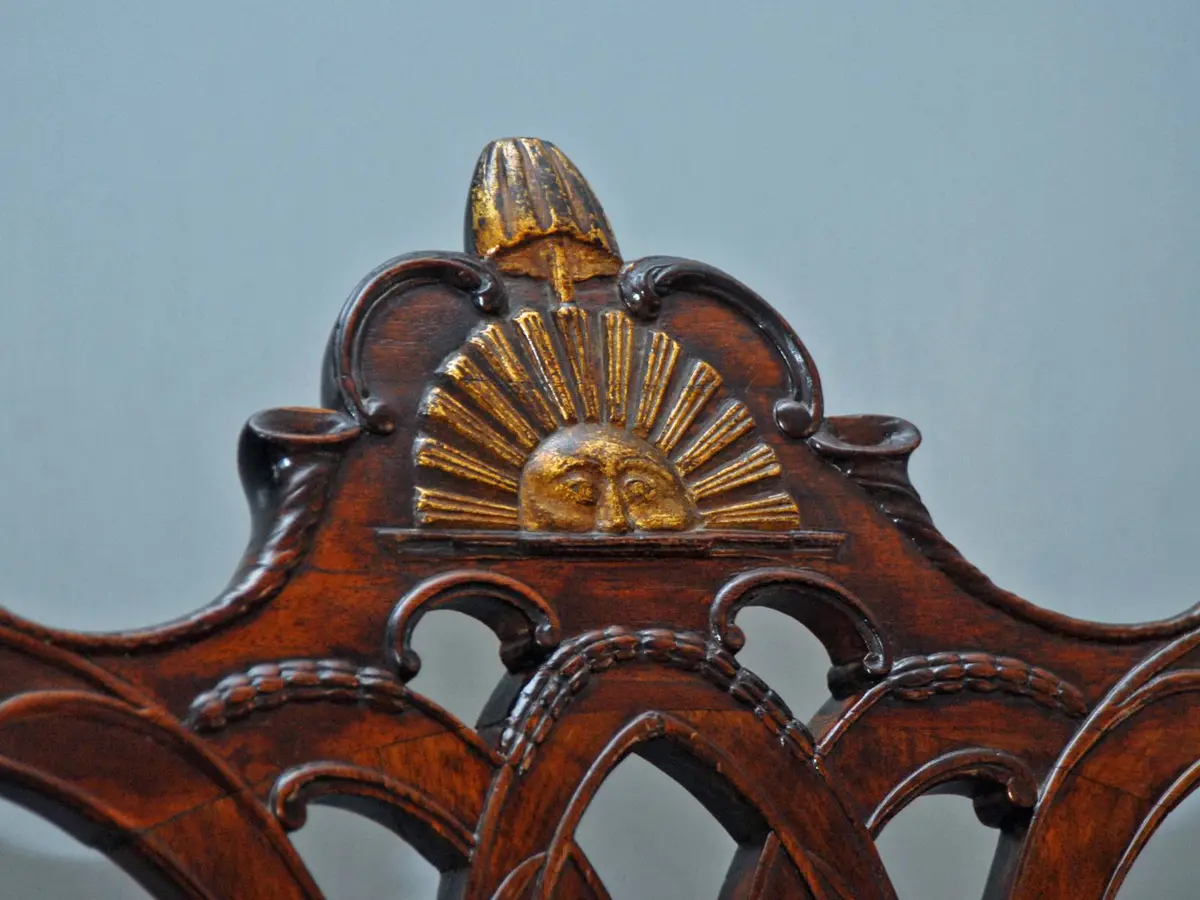
The carved half sun on the back of Washington's chair. On the last day Franklin decided it was a rising sun.. NPS photo / Independence National Historical Park. Franklin, as recorded by MadisonI have the happiness to know that it is a rising and not a setting Sun.
The framers

The general who won the Revolution, then went home. Elected to preside without a single dissent, he held the Convention together from the chair and spoke on the floor once. His name heads the signatures. Two years later he was the first President.

Virginian who shaped the Virginia Plan. He sat in front of the chair, never missed a day and kept the fullest record of the debates. Later co-wrote The Federalist, drafted the Bill of Rights and served as fourth President.

Printer, scientist and the diplomat who won the French alliance. At 81 the oldest delegate, he sat on the committee that broke the deadlock over representation, and closed the Convention by asking every member to sign.

New York-born lawyer who walked on a wooden leg and rose to speak 173 times, more than anyone in the hall. The Committee of Style gave him the pen. He wrote the final text and its opening words: We the People of the United States.
By the numbers
In pictures


Watch, listen, see
Films, photographs and first-hand accounts from across the web. Each opens in a new tab.

Mount Vernon’s film on how Washington led the delegates through the summer of 1787 to a new Constitution.
George Washington’s Mount Vernon
A clear walk through the Philadelphia Convention, the compromises that saved it and the plan it produced.
National Constitution Center
The Archives’ chief of reference shows the Virginia Plan and Washington’s annotated printed draft of the Constitution.
U.S. National Archives
High-resolution scans of all four pages of the Constitution, with a full transcript.
National Archives
James Madison’s original manuscript notes of the Convention debates, scanned page by page.
Library of CongressThe full text of Madison’s notes, one page for each day of the Convention from May to September.
Avalon Project, Yale Law School
Every article and amendment, explained clause by clause by leading constitutional scholars.
National Constitution Center
Independence Hall’s account of signing day, from Franklin’s speech to Washington’s diary that night.
National Park Service“We the People of the United States, in Order to form a more perfect Union, establish Justice, insure domestic Tranquility, provide for the common defence, promote the general Welfare, and secure the Blessings of Liberty to ourselves and our Posterity, do ordain and establish this Constitution for the United States of America.”
Preamble to the Constitution of the United States, signed 17 September 1787
After
That evening the delegates walked to the City Tavern, dined together and took a cordial leave of each other, Washington wrote in his diary. Then he went back to his lodgings to meditate on the momentous work. Maryland delegate James McHenry recorded that a Philadelphia lady asked Franklin what they had made. “A republic,” he answered, “if you can keep it.”
Delaware ratified first, on 7 December 1787. New Hampshire became the ninth state on 21 June 1788, and the Constitution took effect. On 30 April 1789 George Washington, chosen unanimously, took the oath as the first President in New York. Madison steered the Bill of Rights through the First Congress, and it was ratified on 15 December 1791.
The four pages have been on display at the National Archives since December 1952. Twenty-seven amendments later, the plan the 39 signed still governs the United States. It is the oldest written national constitution in force anywhere in the world.