Yankee Stadium, New York · 22 June 1938 · Joe Louis and his corner
Two Minutes and Four Seconds
Two years after his only loss, Joe Louis met Nazi Germany’s champion again and knocked him out in the first round.

The moment · Round 1 · 22 June 1938
Seconds after the opening bell, Louis pins him on the ropes and drives a right into his body. The German cries out and clutches the ropes. Three times Louis puts him on the canvas. A towel flies in. Two minutes, four seconds.
In 1936 Max Schmeling knocked out Joe Louis, and Nazi Germany sold the win as proof of its master race. Louis became heavyweight champion a year later, but he said he would not call himself champ until he beat Schmeling. On 22 June 1938 he got his chance, with the whole country behind him.
The only loss
Joe Louis is 22, unbeaten in 27 professional fights and a 10-to-1 favorite. Max Schmeling, 30, a former world champion, has studied film and noticed that Louis drops his left hand after he jabs. He throws his right over it all night. In the fourth round Louis goes down for the first time in his career. In the twelfth, Schmeling knocks him out.
Champion of the world
Louis fights on. A year after the loss he meets champion James J. Braddock in Chicago, gets up from a first-round knockdown, and knocks Braddock out in the eighth. At 23, the son of Alabama sharecroppers is heavyweight champion of the world. It is not enough for him. He tells reporters, “I don’t want to be called champ until I whip Max Schmeling.”
Muscles like yours
The rematch is set for 22 June 1938, one year to the day after Louis won the title. Germany has just annexed Austria, and the papers bill the fight as America against Hitler. A few weeks out, Louis visits the White House. President Franklin D. Roosevelt has one message for the champion.
President Roosevelt to LouisJoe, we need muscles like yours to beat Germany.
Chappie’s camp
Louis trains in the New Jersey hills with Jack “Chappie” Blackburn, the trainer who has run his corner since his first pro fight. This time there is no golf. Blackburn works on the flaw Schmeling found and drills Louis to keep his left hand up. Louis tells sportswriter Jimmy Cannon he will win by knockout in the first round.
The whole country listening
A sellout crowd of 70,043 fills Yankee Stadium and pays $1,015,012 at the gate. NBC puts announcer Clem McCarthy on the air, and the fight goes out in English, German, Spanish and Portuguese. Some 60 million Americans, nearly half the country, tune in. In Germany it is 3 a.m., and the cafés stay open to listen. Louis takes a two-hour nap before the fight.
No feeling out
Schmeling comes out upright, left hand ready to jab, the same plan that worked in 1936. Louis does not give him time to use it. After a few seconds of feinting he drives Schmeling back with left hooks and pins him on the ropes. A right to the body makes the German cry out in pain. He turns, grabs the top rope, and referee Arthur Donovan steps in to count.
The towel
Donovan waves them on. Louis drops Schmeling with a right hook. He is up at three. Louis lands three clean shots and drops him again. He is up at two. The third knockdown comes near the center of the ring. Trainer Max Machon throws in a towel, and Donovan, under New York rules, throws it back out. Then he waves the fight over. Schmeling has thrown two punches.
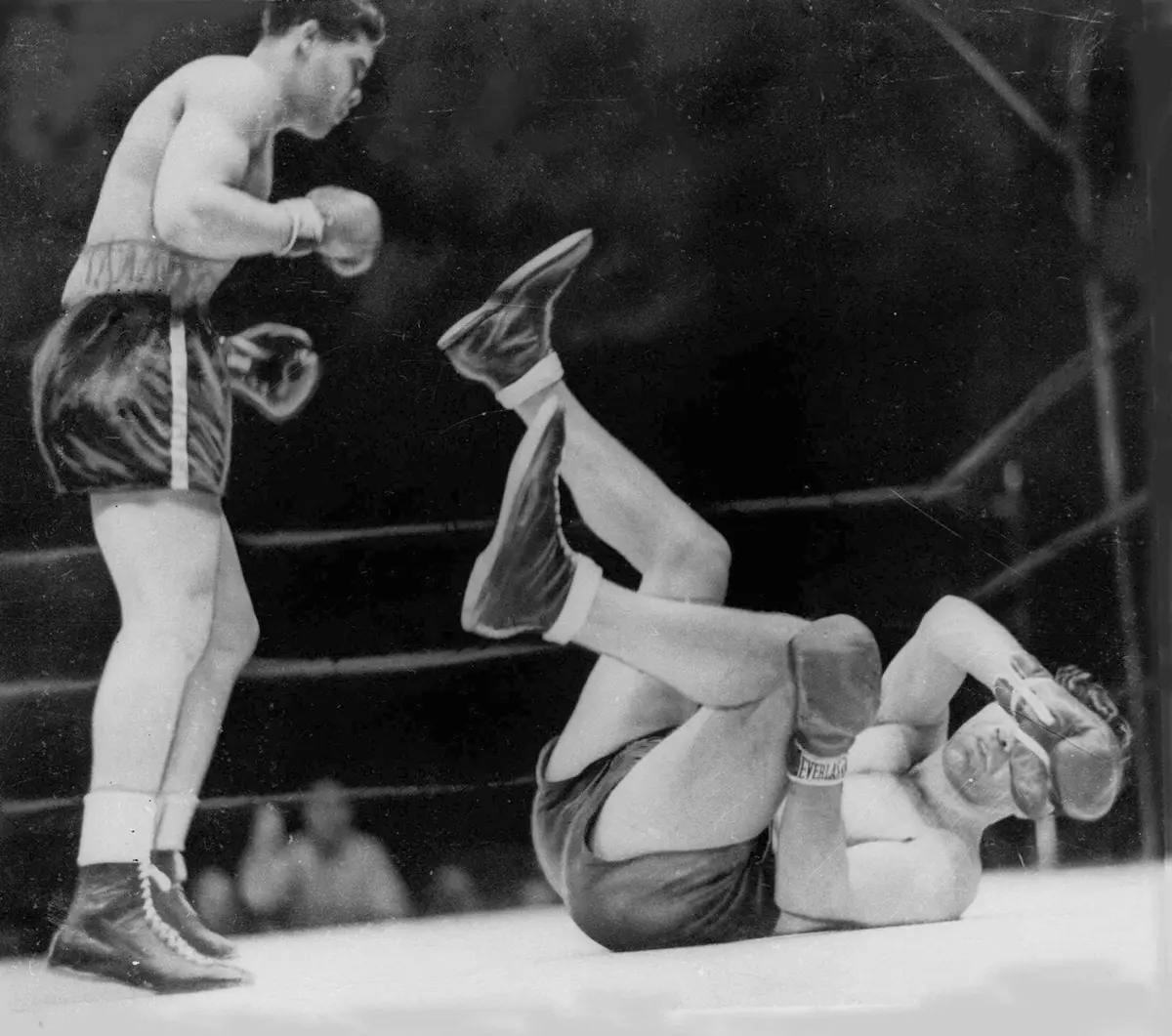
Schmeling goes down in the first round of the rematch, 22 June 1938. Associated Press, via The Plain Dealer. The streets fill
Schmeling leaves the stadium in an ambulance and spends ten days in Polyclinic Hospital. Uptown, Harlem pours into the streets. Bands leave the nightclubs and play on the sidewalks, and crowds dance and chant Louis’s name until morning. Across the country Americans of every color cheer the champion. The next day’s Daily News headline reads JOE KAYOS MAX IN 1ST.
God’s side
A month after Pearl Harbor, Louis defends his title against Buddy Baer at Madison Square Garden, knocks him out in the first round, and gives his purse to the Navy Relief Society. The next day he enlists in the Army as a private. On 10 March, at a Navy Relief dinner in the Garden, Private Louis stands in uniform in the center of the ring and speaks.
Pvt. Joe Louis, Navy Relief Society dinnerWe’re going to do our part . . . and we’ll win because we’re on God’s side.
The champion’s corner

Born in LaFayette, Alabama, to sharecroppers and raised in Detroit. Turned pro in 1934 and won the title in 1937. Erased his only loss in 124 seconds, then served in the Army and defended his crown a record 25 times.

Kentucky-born lightweight with more than 140 recorded fights, often against much heavier men. Trained Louis from his first pro bout, taught him balance, accuracy and the short punch, and fixed the flaw Schmeling had found. Louis called him another father.
By the numbers
In pictures


Watch, listen, see
Films, photographs and first-hand accounts from across the web. Each opens in a new tab.

PBS’s film on the 1938 rematch, with a preview chapter, articles and primary sources on Louis and Blackburn.
PBS
The towel Schmeling’s corner threw in at Yankee Stadium, with the story of the fight embroidered on it.
National Museum of American History
The National Recording Registry essay on Clem McCarthy’s NBC broadcast of the rematch.
Library of Congress
The Office of War Information poster that put Louis’s “God’s side” words on walls across America.
National Archives
How the champion fought Schmeling, enlisted after Pearl Harbor and boxed for two million soldiers.
The National WWII Museum
The Army’s account of Louis’s service: donated purses, 96 exhibitions and the Legion of Merit.
U.S. Army
The signed Everlast gloves Louis wore in the 1936 loss that set up the rematch.
National Museum of American HistoryPresident Reagan’s 1981 statement on the death of his friend, the champion.
Ronald Reagan Presidential Library“The son of an Alabama sharecropper, Joe Louis fought his way to the top of professional boxing and into the hearts of millions of Americans.”
President Ronald Reagan, statement on the death of Joe Louis, 13 April 1981
After
Louis held the heavyweight title until he retired in March 1949, eleven years and eight months, the longest reign in heavyweight history. He defended it 25 times, still a record in any weight class.
In uniform he fought 96 exhibitions for about two million soldiers and traveled more than 20,000 miles. He was promoted to technical sergeant on 9 April 1945, and on 23 September the Army awarded him the Legion of Merit for his “incalculable contribution to the general morale.” Jack Blackburn did not see it. He died on 24 April 1942.
Joe Louis died on 12 April 1981. President Reagan waived the rules so he could rest at Arlington National Cemetery, and he was buried there with full military honors. In 1982 Congress awarded him the Congressional Gold Medal.
Primary sources
- Joe Louis–Max Schmeling Fight, Clem McCarthy, announcer (June 22, 1938). National Recording Registry essay, Library of Congress.
- Boxing Towel used in the Joe Louis–Max Schmeling Fight, catalog record 1980.0683.05. National Museum of American History.
- Statement on the Death of Former World Heavyweight Boxing Champion Joe Louis, President Ronald Reagan, 13 April 1981.
Keep exploring
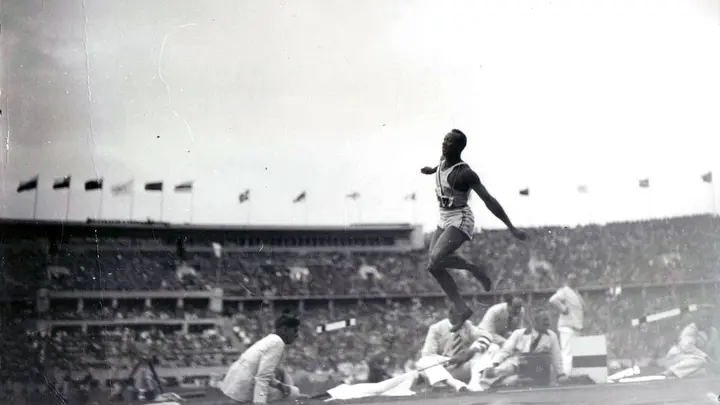
- Four Golds in BerlinIn Hitler’s Olympic stadium, a sharecropper’s son from Alabama won the 100, the 200, the long jump and the relay.4gold medals
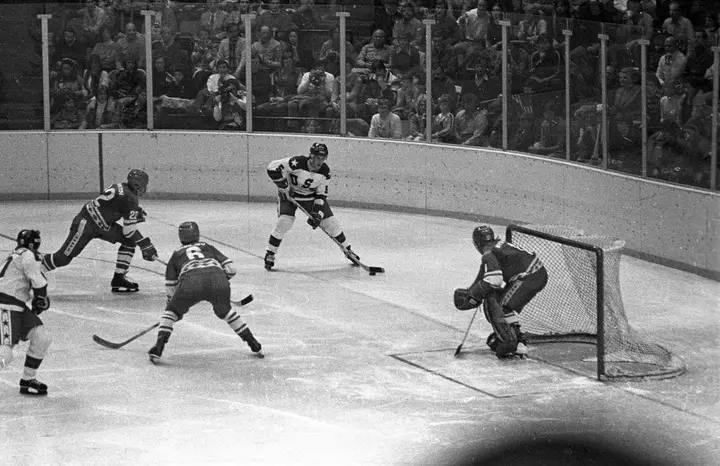
- Miracle on IceA team of college and amateur players beat the Soviet machine at Lake Placid.4–3final score
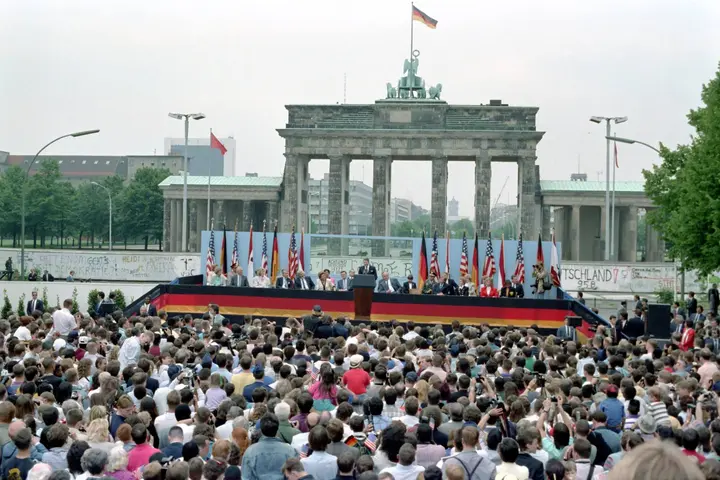
- Tear Down This WallReagan stood at the Brandenburg Gate and dared Moscow to open it. Two and a half years later the Wall came down.28years the Wall stood
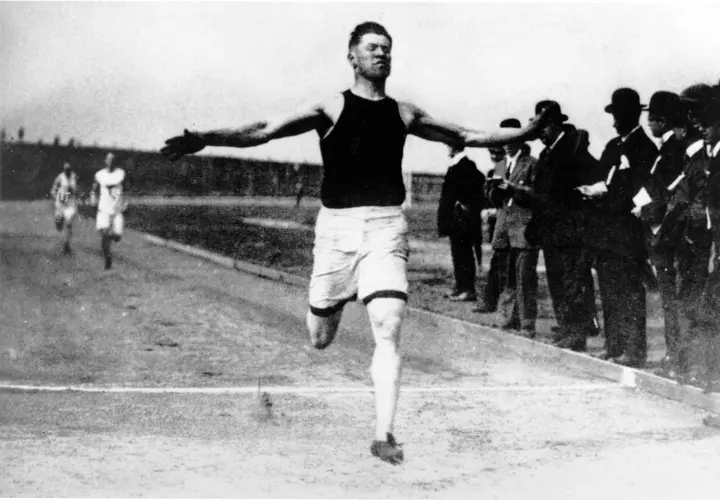
- The Greatest Athlete in the WorldAt Stockholm, Jim Thorpe won the pentathlon and the decathlon. The King of Sweden called him the greatest athlete in the world.2Olympic golds


Free, with no ads. Support the museum →