Boston, Massachusetts · 26 June 1721 · Boylston, Mather and Onesimus
Upon All Sorts of Persons
Smallpox was killing Boston, and one surgeon tried what an African neighbor had described. He kept count of every patient. The numbers won the argument.

The moment · Monday · 26 June 1721
Boylston makes a small cut in his six-year-old son's arm and puts in matter from a smallpox sore. He does the same for Jack, 36, and Jackey, not yet three, enslaved members of his household. No one in Boston has tried this. The town is burying its neighbors, and he is out of patience.
In the spring of 1721 a ship from Barbados brought smallpox to a town of about 10,500. Doctors had no cure. A minister who read the Royal Society's journals and a man from Africa who lived in his house had told Boston of a way to survive it. One surgeon was willing to try, and to write down every result.
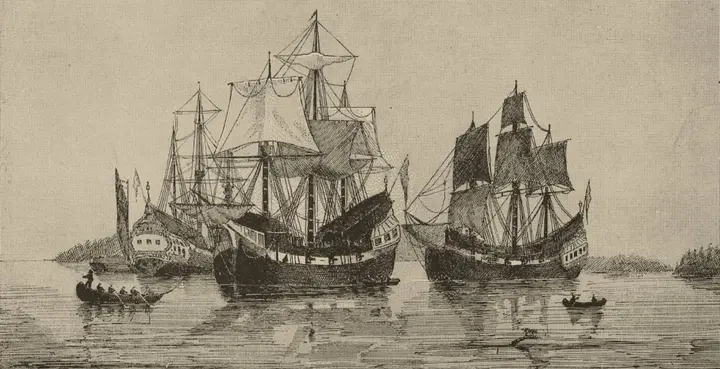
The Seahorse comes in
HMS Seahorse arrives from Barbados with smallpox aboard. Boston has had its fill of the disease before, most recently in 1702 and 1703. By late May it is loose in the town. On 26 May Cotton Mather writes in his diary that the grievous calamity of the small pox has now entered the town. By the time it burns out, more than half of Boston will have caught it.
What Onesimus told Mather
Years before the epidemic, Cotton Mather, a Fellow of the Royal Society, asks Onesimus, an African man in his household, whether he has had smallpox. On 12 July 1716 Mather sets down the answer in a letter to Dr. John Woodward. Onesimus says yes and no. He has had an operation that gave him a little of the disease and kept him from it. He showed Mather the scar on his arm. Mather then reads the Royal Society's reports from Constantinople and Smyrna and finds the same practice.
Mather writes to the doctors
As deaths mount, Mather sends the physicians of Boston an abstract of the accounts by Emanuel Timoni and Giacomo Pylarini. He asks them to meet and consider the method. Almost none will. Only one man takes up the challenge: Zabdiel Boylston, 42 years old, a surgeon with no university degree who has already removed gallstones and a breast tumor, both credited as firsts in the colonies.
Three patients
Boylston tries it first on his own family. He inoculates his six-year-old son Thomas, then Jack and Jackey, whom he owns. All three fall ill about the sixth day, run a mild fever and break out in pustules. By the ninth day the pox is out, and all three recover. A few weeks later Boylston inoculates more patients, and still the three have lived.
The town turns on him
Most of Boston's doctors condemn the practice. William Douglass, the only physician in town with a medical degree, leads the fight. Boston's Selectmen summon Boylston and order him to stop. He pauses, then goes on, and the threats grow until he hides in his own house for about two weeks. On 7 August James Franklin launches the New-England Courant, a paper that mocks the ministers who back inoculation.
New-England Courant, 7 August 1721Homo non unius Negotii: Or, Jack of all Trades.
The worst month
Deaths peak at 411 in October alone. Boylston keeps working. Increase Mather, Cotton's father, and ministers Benjamin Colman, Thomas Prince, John Webb and William Cooper stand with him. Boylston inoculates patients of every age, rich and poor, white and Black, and writes down who recovers and who does not.
A bomb through the window
Mather's nephew, the Rev. Thomas Walter, is staying in the Mather house while he recovers from inoculation. In the night a mob throws a lit bomb through the window. The fuse breaks off and it does not explode. A note is tied to it. Mather and Boylston do not stop.
Note tied to the bomb, 14 November 1721I'l inoculate you with this, with a Pox to you.
The count
The epidemic ends about 22 February. Boston has counted 5,759 cases and 844 deaths, about 1 in 7. Of the roughly 250 people Boylston inoculated, 6 have died, about 1 in 40. Other Boston doctors begin to come around. Even Douglass, who fought hardest against the method, later admits it works.
The numbers cross the Atlantic
Sir Hans Sloane and James Jurin invite Boylston to London in 1724. In 1726 he publishes An Historical Account of the Small-pox Inoculated in New England, upon all sorts of persons, whites, blacks, and of all ages and constitutions. He dedicates it to Caroline, Princess of Wales, and sets out his tally, case by case. He presents it to the Royal Society, and that year he is elected a Fellow.
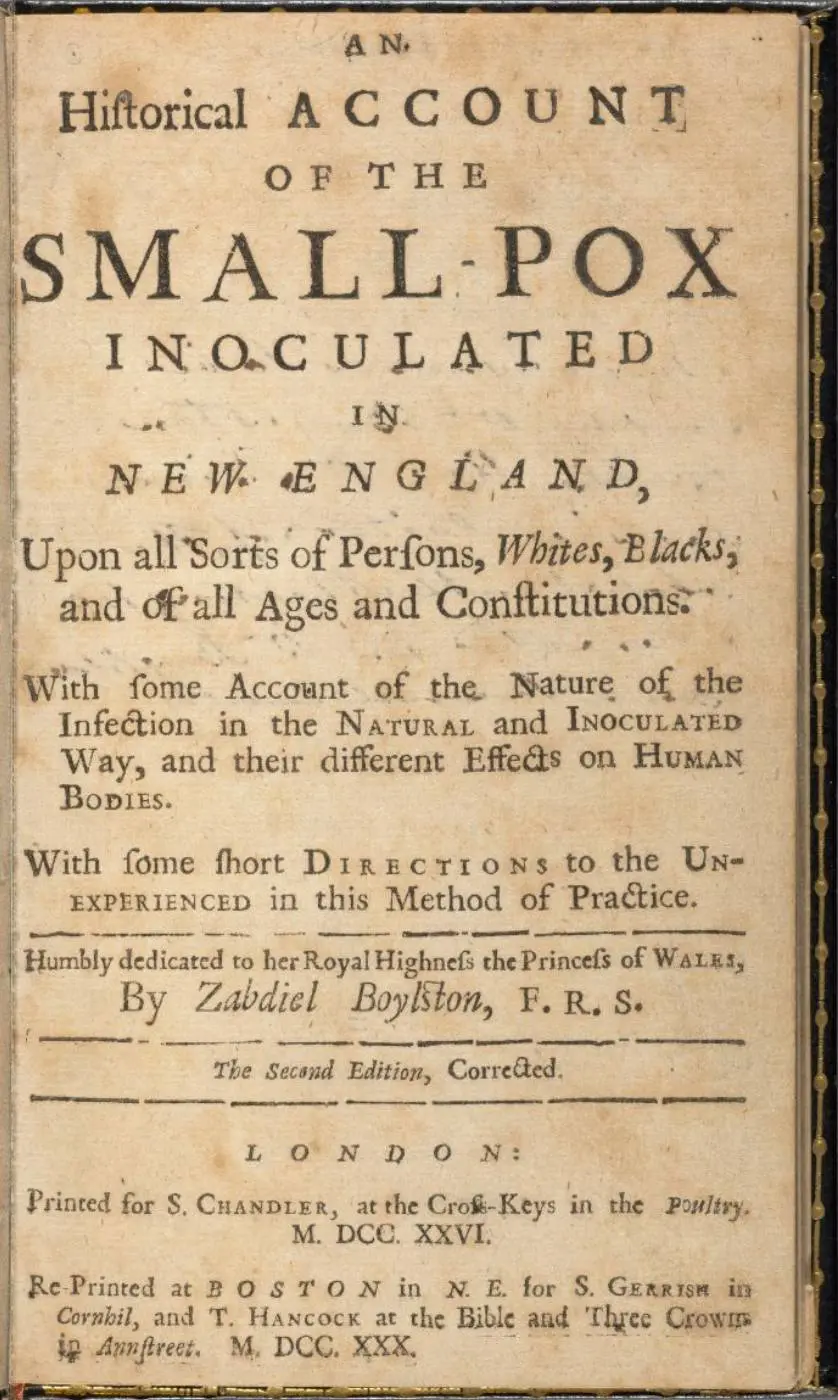
Title page of Zabdiel Boylston's An Historical Account of the Small-pox Inoculated in New England, second edition, London, 1726.. Zabdiel Boylston.
The inoculators

Born in Brookline, he trained by apprenticeship with his father and Dr. John Cutler. He inoculated his own son first, kept a record of every patient, and in 1726 was elected a Fellow of the Royal Society.

A Boston minister and Fellow of the Royal Society since 1713. He gathered the evidence, wrote to the doctors and gave Boylston his backing. His house was bombed for it.

An African man in Mather's household. He told Mather of the operation that had protected him from smallpox, and showed him its scar. Mather freed him in 1716. Boston's first inoculations rest on what he knew.
By the numbers
In pictures


Watch, listen, see
Films, photographs and first-hand accounts from across the web. Each opens in a new tab.

The full book, in the 1730 Boston reprint of the 1726 edition, in which Boylston sets out every case, whites, blacks and all ages.
Internet Archive
The first three patients, day by day, from a Massachusetts Foundation for the Humanities history.
Mass MomentsHow an African man in Mather's household supplied the knowledge, with Mather's own words.
Paul Revere HouseThe College of Physicians of Philadelphia on Onesimus, Mather and the 1721 numbers.
History of VaccinesAn early use of numbers to compare inoculated and natural smallpox, laid out in Boylston's 1726 tables.
James Lind Library
Quarantine and inoculation in the town where Mather preached, with the Mather and Boylston story.
Old North Church
The first issue of James Franklin's paper, 7 August 1721, which took on the inoculation fight.
Wikimedia CommonsA short life of Boylston with his numbers, from Kelly and Burrage's biographical dictionary.
Wikisource“Many months before I met with any intimations of treating the smallpox with the method of inoculation, anywhere in Europe; I had from a servant of my own an account of its being practised in Africa.”
Cotton Mather, letter to Dr. John Woodward of the Royal Society, 12 July 1716
After
The argument lasted a few years. Boylston went on inoculating, and the town's doctors came round. In 1724 he sailed to London, where he lectured to physicians and published his Account. In 1726 he joined the Royal Society. He died in 1766, aged 86. Mather died in 1728.
Boylston's idea was simple. Count the patients, count the deaths, compare. The method crossed the Atlantic in his book and helped persuade Britain's doctors. In February 1777 George Washington ordered the Continental Army inoculated.
Inoculation led to Edward Jenner's cowpox vaccine in 1796. In 1980 the World Health Assembly declared smallpox eradicated. The first American step toward that day was a surgeon's lancet in Boston in June 1721.
Primary sources
- Zabdiel Boylston, An Historical Account of the Small-pox Inoculated in New England. London, 1726.
- Cotton Mather, letter to John Woodward, 12 July 1716, on Onesimus and inoculation.
- James Lind Library, Zabdiel Boylston's evaluation of inoculation against smallpox.
Keep exploring
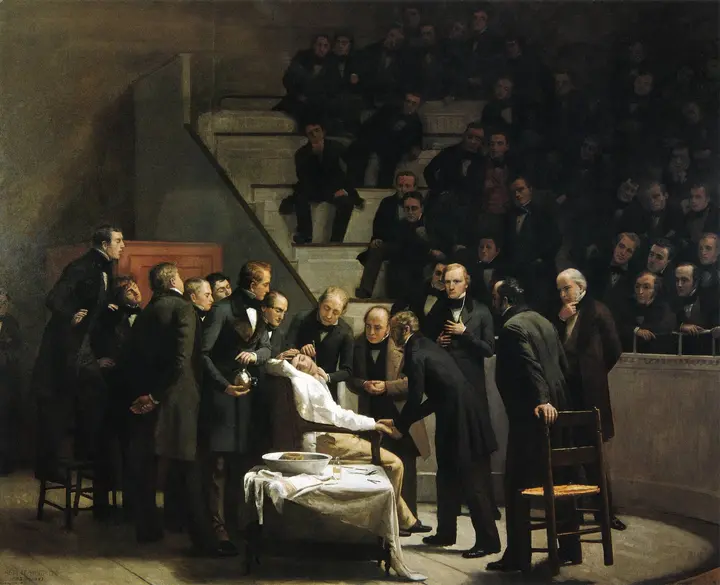
- Ether DayAt Massachusetts General Hospital, a Boston dentist put a patient under ether before a gallery of doctors, and within weeks the world knew surgery no longer had to hurt.1stpublic operation under ether
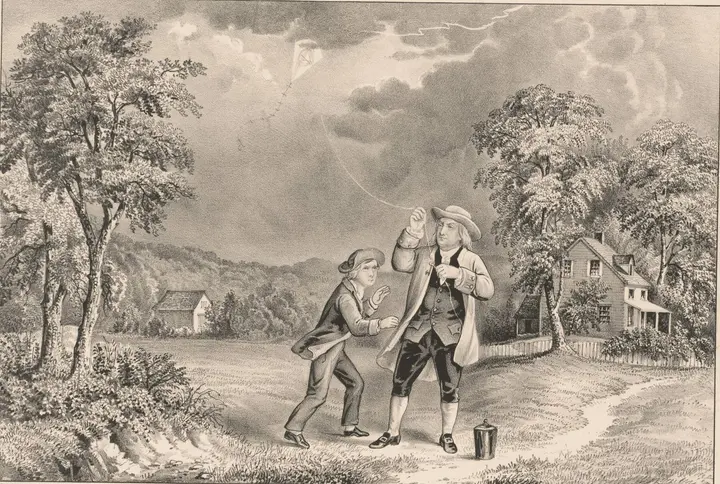
- Franklin and the Lightning RodFranklin proposed the test, a kite repeated it in a Philadelphia storm, and a few feet of iron rod gave every house a way to survive lightning.6–8 ftof iron rod to save a house
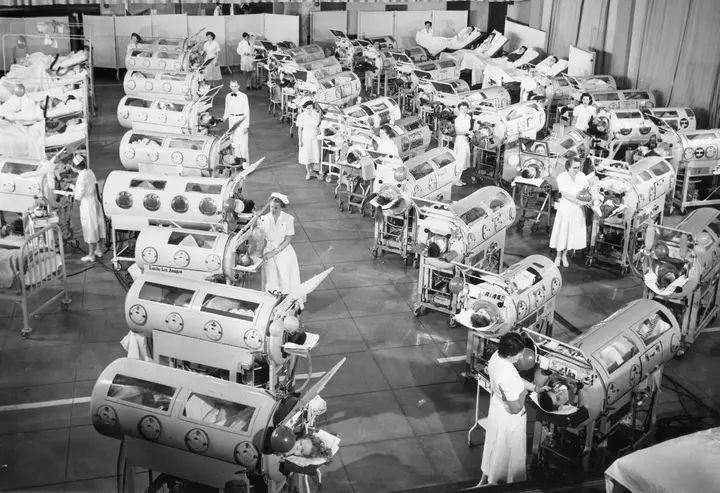
- The Polio VaccineJonas Salk’s vaccine was tested on nearly two million schoolchildren, declared safe and effective, and never patented.1.8Mchildren in the trial
- A City upon a HillJohn Winthrop told the Puritans bound for Massachusetts Bay they would be a city upon a hill, with the eyes of all people upon them.11ships, one charter


Free, with no ads. Support the museum →