Long Island of the Holston to the Kentucky River · 10 March 1775 · Daniel Boone and the axmen
The Beautiful Level of Kentucke
In the spring of 1775 Daniel Boone and about thirty axmen cut a road 200 miles through the mountains to the Kentucky River. Before it there was a hunters’ path. After it came a nation’s worth of settlers.

The moment · 10 March 1775 · Long Island of the Holston
Long Island of the Holston. Boone stands with about thirty axmen and the Cumberland Mountains ahead. There is no road, only forest and cane. By 1 April the men are building a fort on the Kentucky River.
Undertook to mark out a road in the best passage from the settlement through the wilderness to Kentucke.Daniel Boone, as told to John Filson, 1784
In 1775 the Appalachians still shut Americans out of Kentucky. Hunters knew the way through Cumberland Gap, but no wagon or family had a road. Judge Richard Henderson of North Carolina bought the land from the Cherokee and needed a way in. He hired Daniel Boone, who had first seen Kentucky six years before. Boone took his axmen to the Holston River and started cutting.
The first sight
On 1 May 1769 Boone leaves his home on the Yadkin River in North Carolina with five companions: John Finley, John Stewart, Joseph Holden, James Monay and William Cool. Finley has traded in Kentucky and knows the way. After five weeks in the mountains they reach the Red River, climb a rise and look out over the plains. Buffalo are everywhere, in herds of hundreds.
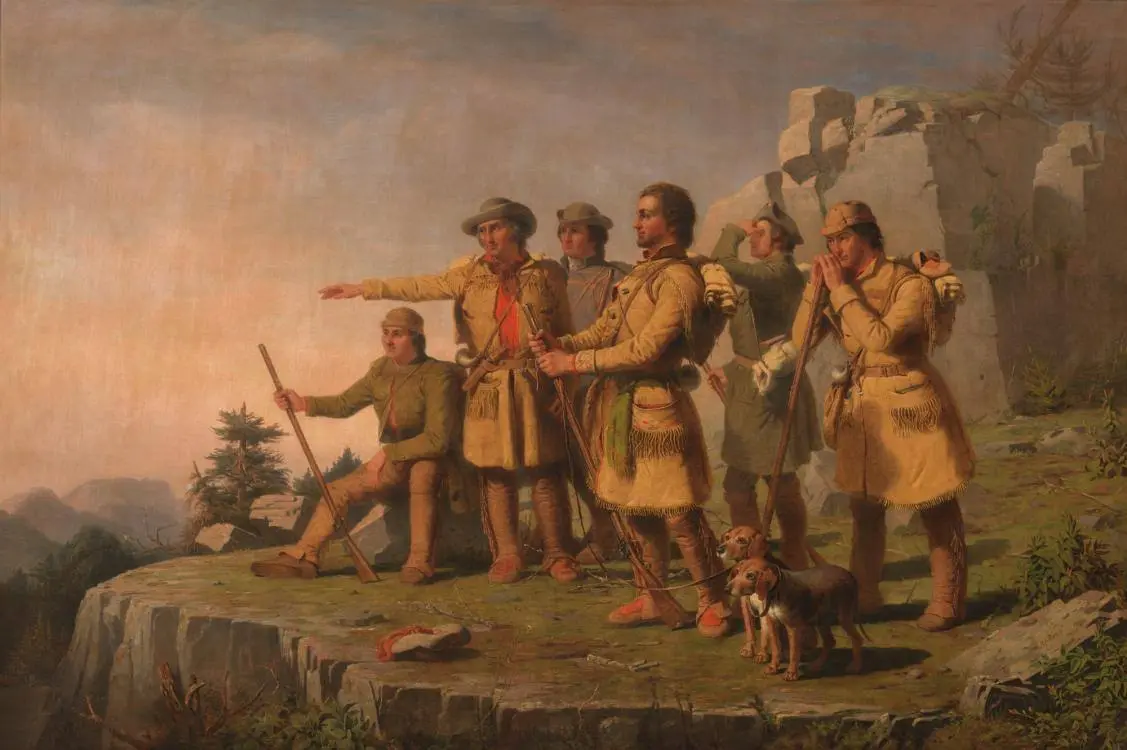
Boone’s First View of Kentucky, painted by William Ranney: John Finley points out the land to Boone and his party, 7 June 1769.. William Tylee Ranney. Daniel Boone, 1784Saw with pleasure the beautiful level of Kentucke.
The long hunt
The men hunt through the autumn. On 22 December Boone and Stewart are taken by a party of Indians, held for seven days and then escape. Boone stays on, and by his own account spends the next fifteen months scouting the country and naming the creeks and rivers. In March 1771 he goes home to the Yadkin, set on bringing his family to live in Kentucky.
Daniel Boone, 1784Kentucke, which I esteemed a second paradise, at the risk of my life and fortune.
The first try
Boone sells his Yadkin farm and sets out for Kentucky with five families. Forty more men join them in Powell’s Valley, about 150 miles from the settled parts of Kentucky. On 10 October Indians attack the rear of the company. Six men are killed, among them Boone’s eldest son, James. The company turns back. The road is still there to be cut.
Axes in the cane
Boone gathers about thirty axmen at Long Island of the Holston, near today’s Kingsport, Tennessee. They follow the old hunters’ path into Powell’s Valley, climb to Cumberland Gap, then drop into the cane country of Kentucky. They clear trees, cut through thickets and open a track wide enough for pack horses. Every mile cut now is a mile that families will not have to cut themselves.
Daniel Boone, 1784I soon began this work, having collected a number of enterprising men, well armed.
The Transylvania purchase
Judge Richard Henderson and his partners in the Transylvania Company meet the Cherokee on the Watauga River. Boone is there at their request to mark out the boundaries. On 17 March the deed is signed. The company gets some 20 million acres between the Kentucky and Cumberland Rivers, for trade goods worth £10,000. Henderson has already sent Boone ahead to cut a road.
Surprised, and standing
About fifteen miles short of the place where Boonesborough now stands, Indians fire on the party. Two men are killed and two wounded. Days later they are fired on again. Two more men are killed and three wounded. Boone’s company does not turn back. Felix Walker, one of the wounded, is carried along, and the axmen keep cutting toward the Kentucky River.
Daniel Boone, 1784Yet, although surprised and taken at a disadvantage, we stood our ground.
Fort Boonesborough
The road reaches the Kentucky River. On 1 April Boone’s men begin a fort at a salt lick on the south side, about sixty yards from the water. They work on it until 14 June. Henderson arrives with his company on 20 April, his fortieth birthday. In May delegates from the new settlements meet at Boonesborough to make laws for the colony. The road now has a destination.
The road fills
Boone’s trace becomes the Wilderness Road, the main way west for Americans. Kentucky counts 73,677 people in 1790 and 220,955 in 1800. By 1810 it counts 406,511. Historians estimate that 200,000 or more pioneers used the road. On 1 June 1792 Kentucky enters the Union as the 15th state, the first west of the Appalachians.

The pathfinders

Pennsylvania-born hunter who grew up on the Yadkin in North Carolina. He first saw Kentucky in 1769. In 1775 he led the axmen who cut the road through Cumberland Gap, then built Fort Boonesborough on the Kentucky River.

North Carolina judge who organized the company, bought some 20 million acres from the Cherokee and hired Boone to cut the road. He reached Boonesborough on 20 April 1775. Later he helped found the settlement that became Nashville.

Member of Boone’s road party, wounded by Indians in March 1775. He later wrote an account of the journey that historians still use for the road’s building, and served North Carolina in Congress.
By the numbers
In pictures


Watch, listen, see
Films, photographs and first-hand accounts from across the web. Each opens in a new tab.
John Filson’s 1784 book, with Boone’s account of the first hunt, the road and Boonesborough, in his own words.
Project Gutenberg
The 17 March 1775 deed by which the Cherokee conveyed some 20 million acres to the Transylvania Company.
North Carolina Anchor
The Kentucky Historical Society on the road from Cumberland Gap to Fort Boonesborough, with the markers along it.
Kentucky Historical Society
Marker text for the first marked route settlers used to travel into Kentucky.
Kentucky Historical Society
A short video on the Wilderness Road, the main way west for Americans from 1775 to 1820.
Americana Corner
Cumberland Gap National Historical Park: the gap, the Wilderness Road Trail and the pioneer history around them.
National Park Service
Mildred Leedy Armao on how the road was improved and used by the pioneers who came after Boone.
Kentucky Historical SocietyHow Judge Richard Henderson and his partners acquired the land through which Boone cut the road.
N.C. Dept. of Natural and Cultural Resources“I returned home to my family with a determination to bring them as soon as possible to live in Kentucke, which I esteemed a second paradise, at the risk of my life and fortune.”
Daniel Boone, as told to John Filson, The Discovery, Settlement and Present State of Kentucke, 1784
After
Boone said the fort was finished on 14 June 1775 and brought his family to Boonesborough that fall. Henderson’s company claimed the land as the colony of Transylvania, but Virginia did not recognize it. The road and the settlements stayed. In 1776 Boone led the party that rescued his daughter Jemima and two other girls from capture.
The trace Boone marked became the Wilderness Road. It ran from the Holston through Cumberland Gap to Kentucky and was widened and improved in the years that followed. By 1810 it had carried some 200,000 pioneers or more. On 1 June 1792 Kentucky entered the Union as the 15th state.
Boone died on 26 September 1820 at the age of 85. Henderson later helped found a settlement on the Cumberland that became Nashville. Today Cumberland Gap National Historical Park preserves the gap and a stretch of the Wilderness Road Trail.
Keep exploring
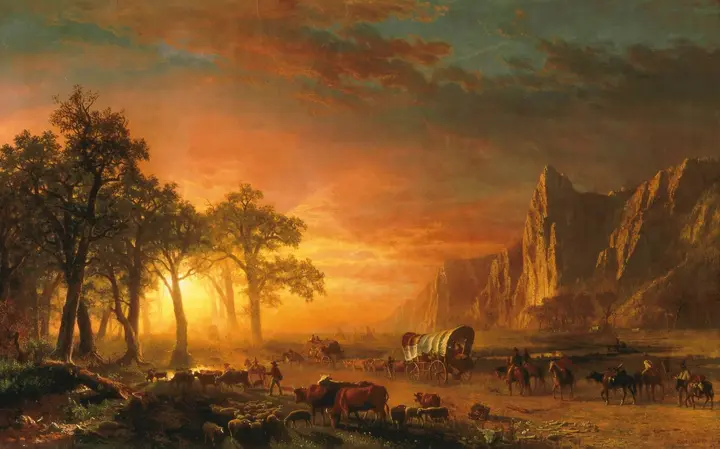
- The Oregon TrailIn 1843 nearly a thousand emigrants loaded their lives into wagons and walked across a continent to Oregon.2,000miles by wagon
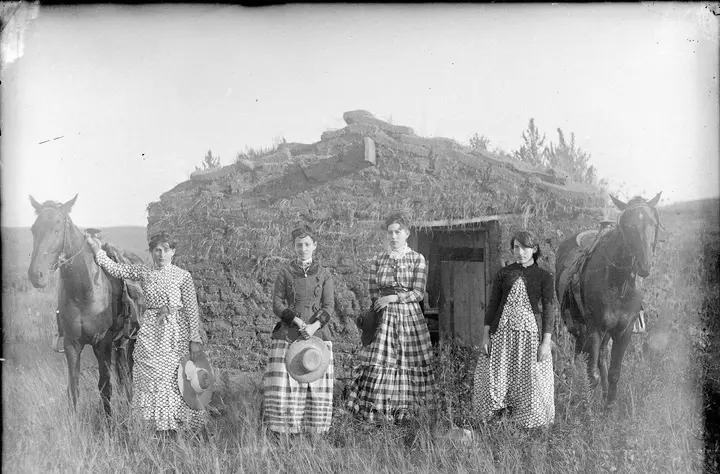
- The Homestead ActAny citizen willing to live on 160 acres and farm it for five years could own it. Homesteaders claimed 270 million acres, a tenth of the country.270Macres settled
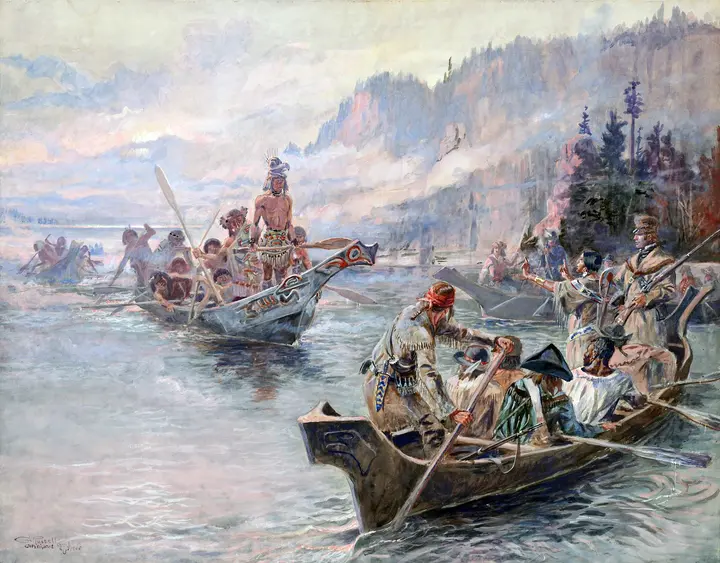
- Lewis & ClarkAcross a continent no American had crossed, to the Pacific, and back again.8,000miles
- The Mayflower CompactBefore they set foot ashore, the Pilgrims agreed to govern themselves by laws they would make together.41signers


Free, with no ads. Support the museum →